
Dried Orange Peel

This is my go-to way to make dried orange peel for Chinese recipes. If you cook a lot of Chinese food, you already know the magic trick: a little citrus aroma can make savory dishes taste brighter and more “alive.”
This post may contain affiliate links. Our privacy policy.
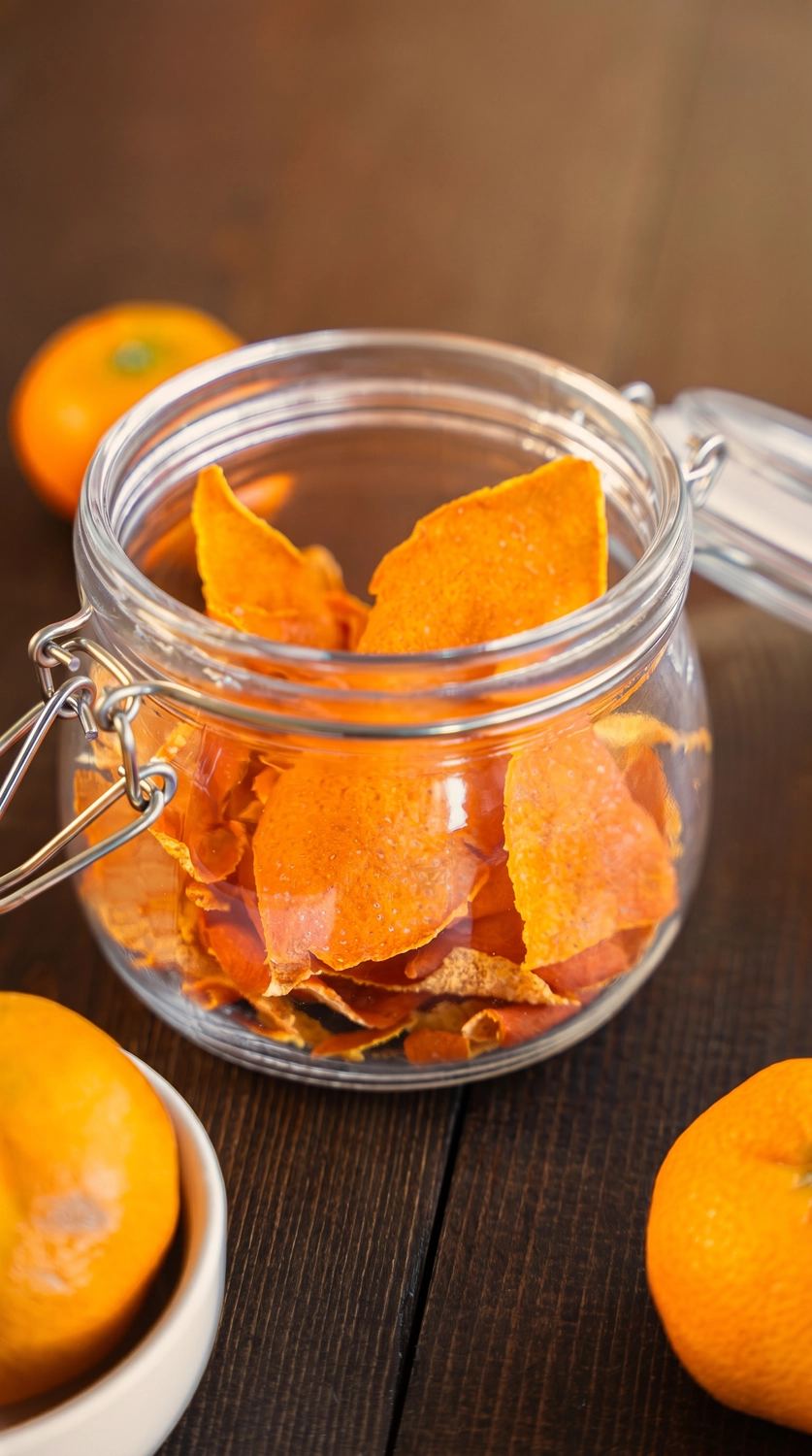
Orange peels are kind of… ridiculously underrated.
They’re versatile in a way that feels almost unfair. You can use them in recipes, brew them into tea, tuck them into a jar for that bright citrus fragrance, toss them into cleaning hacks, and yes, some people even use them for skin care. Who knew, right? 🍊
But my favorite way to use them is in Chinese cooking, especially in dishes like my Oxtail Soup and my (coming soon) Duck Roast. That little hit of dried citrus gives this warm, mellow aroma that makes everything taste deeper and more “finished.”
And honestly, this all started because my kids are orange monsters. They crush a whole bag… and I’m left staring at a pile of peels like, welp, guess this is compost. Except I’m all about less waste, and I learned you can actually use orange peels in cooking… so I looked up the price of dried orange peel online.
I about keeled over.
In these times? For those prices?? Noooo thank you. Making your own takes a little time, but the payoff is huge, and it lasts forever if you store it right.
What Is Dried Orange Peel?
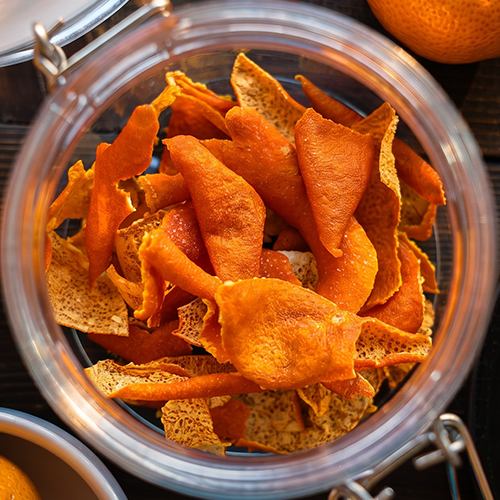
Dried orange peel is simply the outer orange skin of the fruit that’s been fully dried until crisp and breakable. Once dried, you can keep it as strips, crush it into flakes, or grind it into a fine powder.
In cooking, it’s used the way you’d use a spice: to add a deep citrus aroma without adding moisture.
Uses for Dried Orange Peel
Here are my favorite ways to use it:
- Chinese recipes: Adds that subtle fragrant citrus note to soups, braises, marinades, and roast meats (like my Oxtail Soup and Duck Roast, recipe coming soon).
- Spice blends: Citrus powder is gorgeous in savory blends, like my Citrus Furikake (recipe coming soon).
- Dry rubs: Add a pinch to rubs for grilled meats (it’s so good with my Pulehu Steak rub or Huli Huli Chicken rub).
- Tea: Steep a strip in hot water for a simple citrus tea.
- Baking: Dried orange powder can be mixed into doughs, crusts, and shortbread.
- Pretty finishes: Grind it super fine and dust it over yogurt bowls, cinnamon rolls, or frosting for color + fragrance.
Why Make Your Own Dried Orange Peel?
Let me be real: this is one of those “tiny effort, big reward” kitchen things.
- You’re using what you already have. If your house goes through oranges, you’re basically tossing money in the trash by throwing peels away.
- It lasts a long time. Stored correctly, dried orange peel can last up to 2 years.
- It’s expensive to buy. I looked up the price once and genuinely felt personally attacked.
- It’s a low-waste win. This is one of my favorite ways to stretch ingredients and reduce waste.
- You can convert it to powder. If you start stockpiling too much, grind it down and it suddenly becomes “spice blend material.”
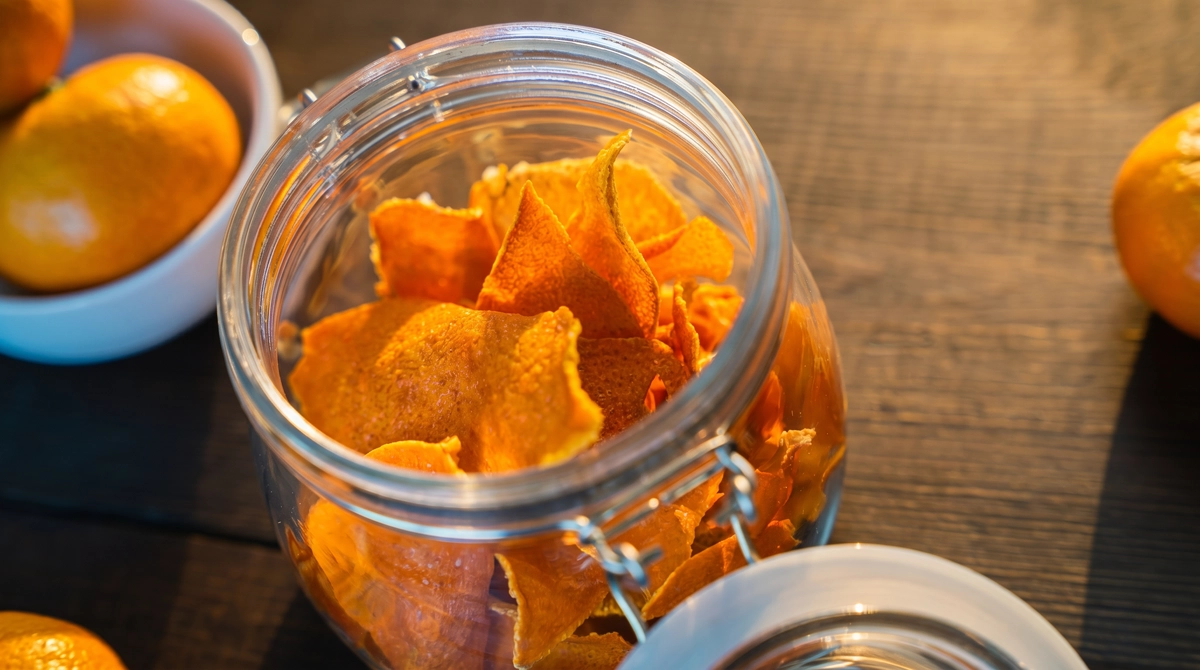
Storage rule: airtight glass jar + away from light = happy peel.
Fun Facts
A fun one I grew up hearing (and it still makes me smile): In Chinese tradition, aged dried orange peel is believed to become more valuable or effective over time. So if you’ve got a jar of it tucked away, congratulations, you’re not hoarding. You’re “aging.” 😌
Also, the most important flavor tip is simple. If you remove the white pith, you remove most of the bitterness. That’s the whole game.
If you’re intentionally buying oranges just for this, here’s what I look for:
How to Pick the Best Oranges for Drying
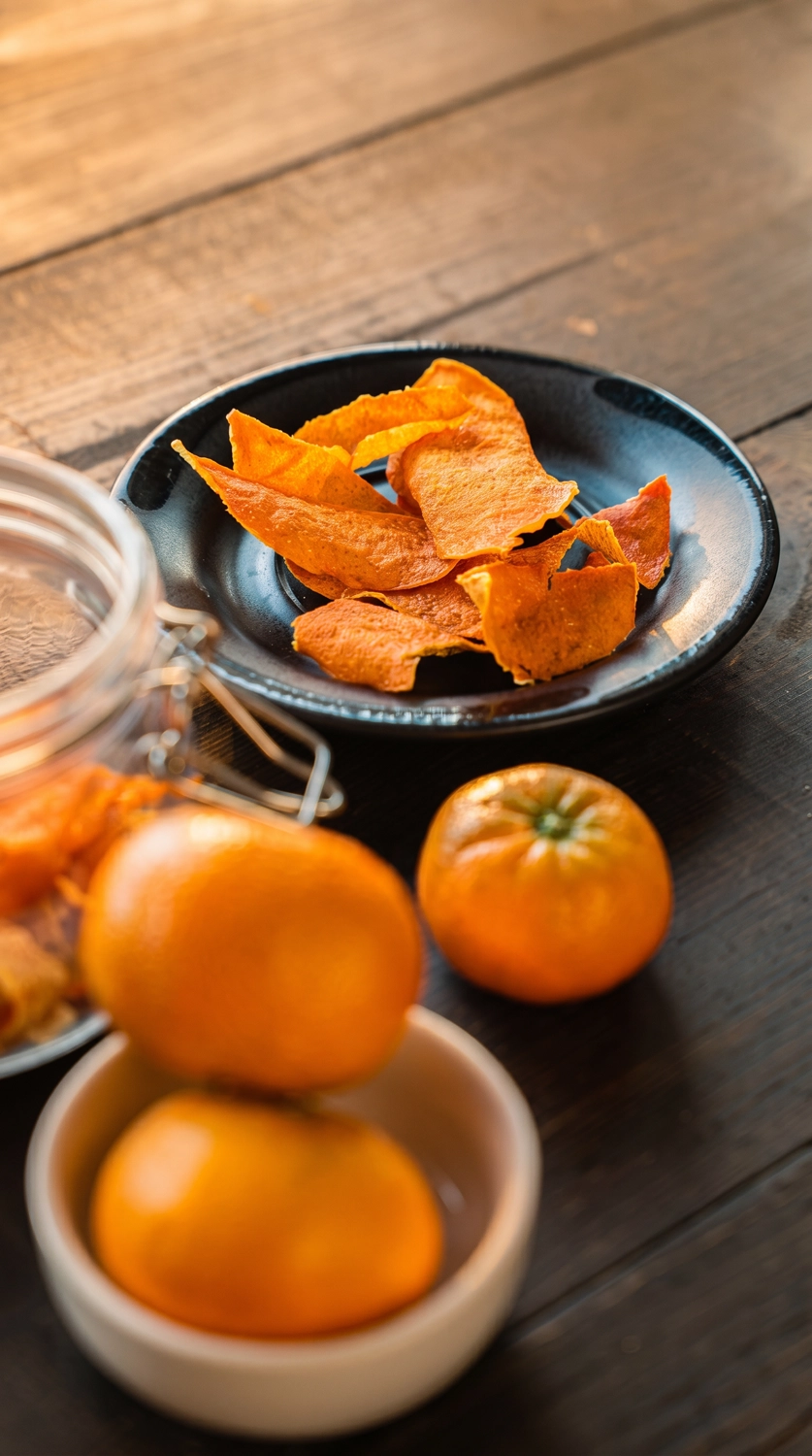
- Buy in season if you can. On the mainland, peak orange season is usually winter, which is why you see them everywhere.
- If it’s not winter, still easy:
- Choose oranges that are the most rich, saturated orange (pale ones are often picked early).
- Check the dimple scar (where the orange was picked from the tree):
- Slightly indented = ripe
- Protruding/rounded = likely unripe
- Smell the dimple. If it smells strongly like orange, you’re in business.
How to Make Dried Orange Peel
Time needed: 30 minutes
If you’re not buying organic oranges, no problem. Most grocery store citrus has a wax coating to help it travel well.
- Clean the orange
Carefully pour boiling water over the oranges. Use a stiff-bristled brush and scrub under hot running water. Soak oranges in warm water + 1 teaspoon baking soda for 15 minutes. Rinse under cool water and dry completely.
- Remove the pith
Use a peeler, paring knife, or your hands to peel. Scrape off leftover pith with a paring knife. Try not to pierce the peel and get juice on it. Moisture slows drying.
- Dehydrator method
Lay peels on dehydrator trays in a single layer, not touching. Dehydrate at 135°F for about 2 hours, or until peels are hard, crisp, and breakable. Cool completely before storing in an airtight jar.
- Oven method
Preheat oven to the lowest setting (usually 180°F). Line a baking sheet with parchment and arrange peels in a single layer. Place in the oven and use a chopstick to prop the oven door slightly open (this helps moisture escape). Bake about 3 hours, or until peels are completely dry and breakable. Cool completely before storing.
- Sun-drying method
Place peels on a sheet pan in a single layer. Set outside in direct sun (skip humid rainy/snowy days). Flip peels once a day for about 5 days, or until hard and crispy.
Store in an airtight container in a dark place.
Storage
– Cool completely before storing.
– Keep in an airtight glass jar, away from light and heat.
– If peels soften in the jar, they weren’t fully dry. Re-dry and cool again.
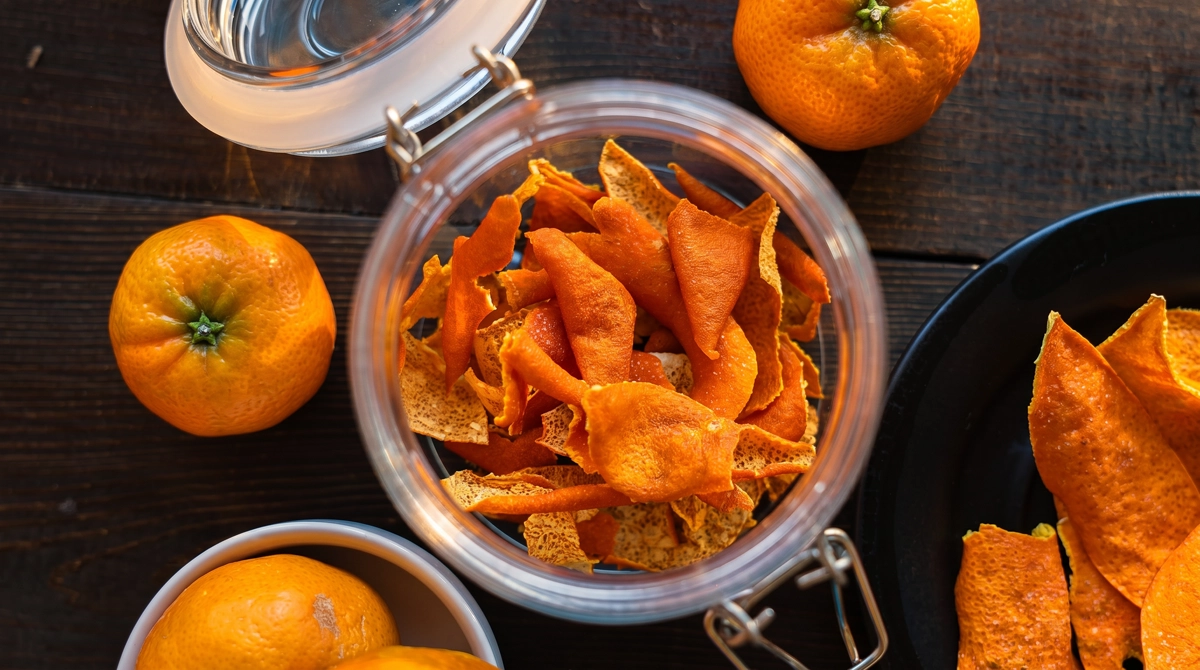
– It can be stored for up to 2 years!
FAQs: Dried Orange Peels
Nope, I usually skip boiling. If you scrape off the white pith well, you’ll avoid most bitterness without boiling. Boiling can also add extra moisture (which you’re trying to remove) and may dull some of the natural citrus oils.
Zest is freshly grated peel used right away (and still has moisture). Dried orange peel is peel that’s been dehydrated until crisp, then stored for later. Dried peel has a deeper, warmer aroma and works great in soups, braises, teas, and spice blends.
Bitterness almost always comes from the white pith. Peel as thinly as you can and scrape off the pith with a paring knife before drying.
They’re not fully dry yet. Keep drying until the peel is hard and snaps/breaks easily. If they soften in the jar later, re-dry briefly and cool completely before storing again.
Your heat was likely too high, or they dried too long. Oven temps vary a lot. Dry low and slow, and if they start browning, lower the temp if possible and/or crack the oven door a bit more for airflow.
Yes. Navel, Valencia, Cara Cara, mandarins… they all work. Just know that thinner-skinned citrus may dry a little faster, and different varieties will have slightly different fragrance.
Yes! This works for lemon, grapefruit, lime, yuzu, and more. Just scrape the pith well (especially grapefruit), and dry until crisp.
Similar Recipes You Might Love
What to eat chicken salad with?
- Kalbi Ribs to balance out the light salad
- Mac salad for a true plate-lunch mood
- A simple soup (miso soup or even chicken long rice)
Homemade Dried Orange Peel (Dehydrator, Oven, or Sun)
Equipment
- Parchment paper (oven method)
- Chopstick (oven door trick)
- Dehydrator + trays (dehydrator method)
- mortar and pestle or spice grinder/blender (optional)
- gloves (for handling hot water) (optional)
Ingredients
Ingredients
- 6 oranges (or as many peels as you have)
- 1 teaspoon baking soda (for soaking)
- boiling water (for wax removal)
Instructions
- In a bowl of warm water, add baking soda. Soak oranges for 15 minutes. Rinse under cool water and dry completely.
- Use a peeler or paring knife (or peel by hand) to remove the orange peel in strips. Try to avoid piercing the orange and getting juice on the peel.
- Use the edge of a paring knife to scrape off as much white pith (the bitter white lining) as possible. Keep peels as dry as possible.
Dehydrator Method:
- Arrange peels on dehydrator trays in a single layer, not touching, with airflow between pieces.
- Dehydrate for about 2 hours, or until peels are hard, crisp, and breakable (time can vary by thickness/humidity). Cool completely before storing.
Oven Method:
- Set oven to lowest setting: 180°F. Line a baking sheet with parchment paper and arrange peels in a single layer.
- Bake about 3 hours, or until peels are completely dry and breakable. Prop the oven door slightly open with a chopstick to help moisture escape. Cool completely before storing.
Sun-Drying Method:
- Arrange peels in a single layer on a sheet pan and place in direct sun (avoid rainy/snowy/humid days).
- Flip peels once a day until hard and crispy, usually around 5 days depending on your climate. Cool and store in an airtight container in a dark place.
- Optional: Crush into flakes with a mortar & pestle, or grind into a fine powder in a spice grinder/blender for teas, spice blends, and rubs.
Notes
- Dried orange peel can last up to 2 years when fully dried and stored correctly: in an airtight glass jar, away from light and heat.
- If peels soften after storing, they likely weren’t fully dried. Re-dry until crisp, cool completely, then re-jar.
- For less bitterness, remove as much white pith as possible before drying.
- Best airflow = best drying. Keep peels from touching, especially in a dehydrator.
- If your oven runs hot and peels start browning, lower the temp if possible and keep the door propped slightly to vent moisture.
- If you’re buying oranges specifically for this, look for a deep, saturated orange color and a slightly indented dimple scar, plus a strong orange aroma.
 Broke Da Mout: 10 of Hawaii's Local Recipe Cards - Series #1