
Gau: A Recipe from Hawaii for Chinese New Year

This gau is an authentic recipe from Hawaii. It is a chewy treat to celebrate every Chinese New Year made with simple ingredients.
This post may contain affiliate links. Our privacy policy.
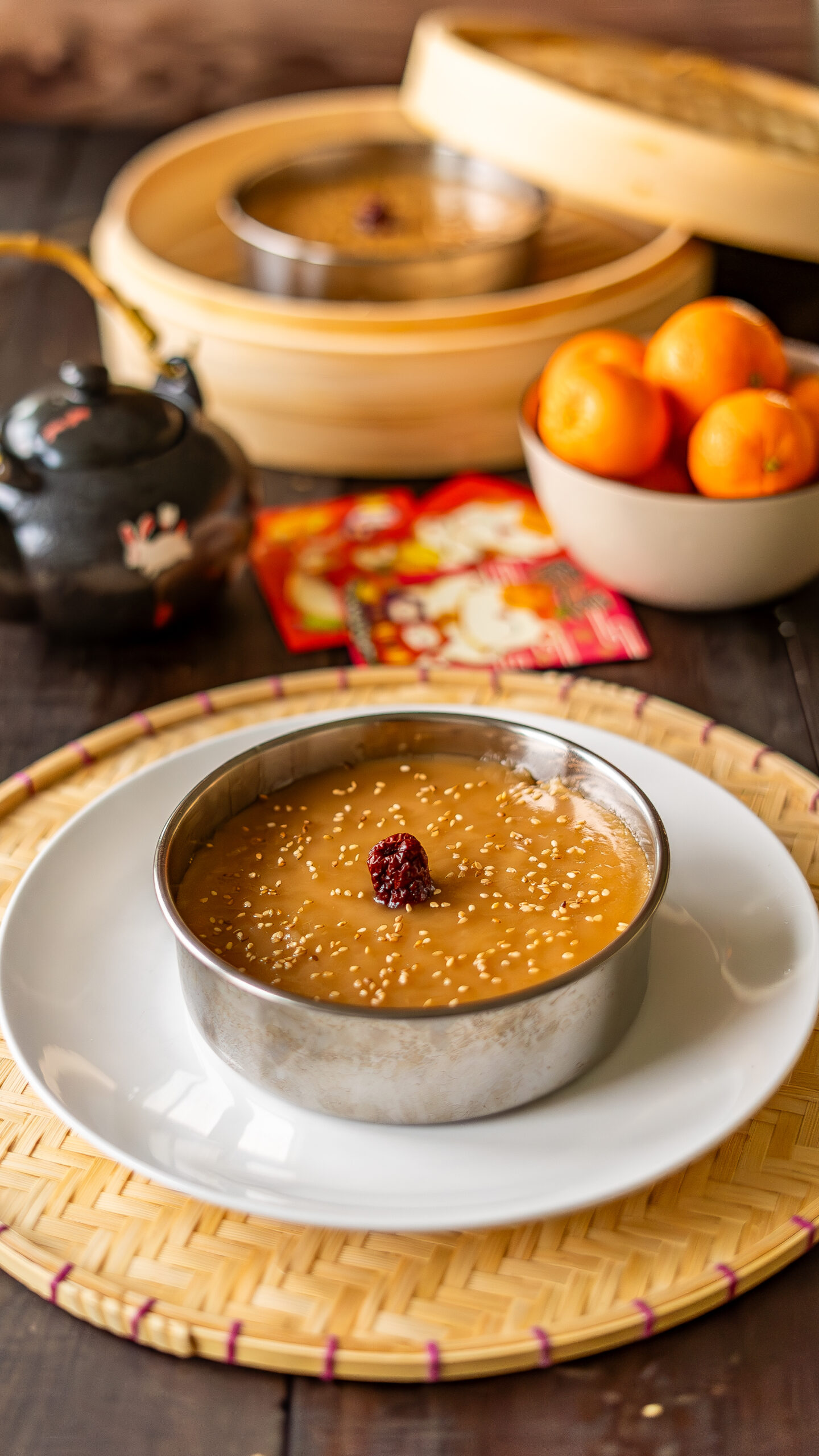
What is Gau?
The original Gau is actually called nian gao (年糕) but in Hawaii, it was adopted and called Gau. Gau was first introduced to Hawaii back in the sugar plantation days. With the Chinese immigrants, they brought along their many traditions and Gau was one of them.
Many families have their variety of Gau. On my Chinese side, my grandma always made Gau for her family. My dad fondly recalls how he would get excited around Chinese New Year because he would watch Grandma prepare the ti leaves, oil them, and set them in a round baking deep-dish pan. She would then mix the mochiko flour with the brown sugar, water, and oil, pour it into the pan, and steam it in a large steamer.
After it was done cooking, my dad had to wait until it was cool enough to cut and grind! The leftovers were always frozen and sliced up in pieces. Whenever the family wanted to snack, they’d pan-fry the leftovers until they were crispy on the outside but soft and gooey on the inside.
Where can you find Gau?
In Hawaii you can find Gau usually in Chinese Bakeries and Shops:
- Char Hung Sut (no longer in business)
- Sing Cheong Yuan Bakery
I’ve also seen Gau usually homemade because of its simplicity. Every Chinese New Year, my aunt would invite me to eat at her favorite Chinese dim sum restaurant. She’d also bring her freshly made gau to share with the restaurant owners.
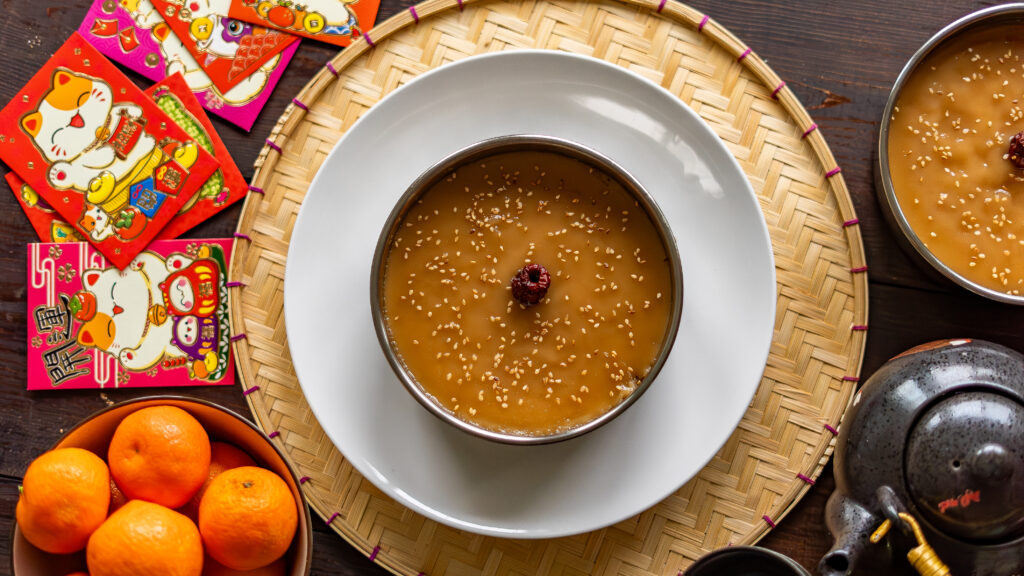
What ingredients are used in Gau?
This recipe for a Hawaii Gau uses:
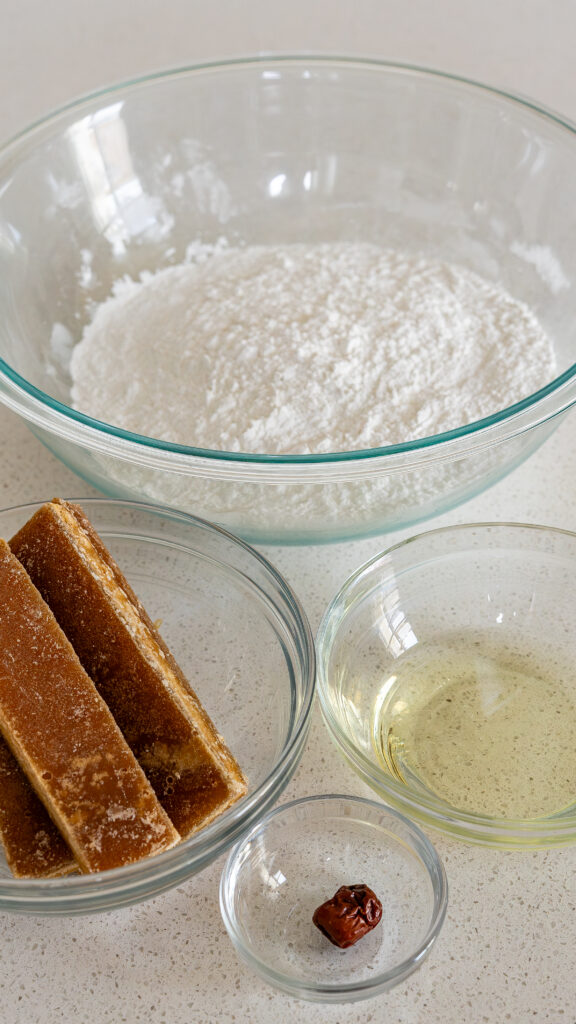
Suggested ingredients
This Chinese brown sugar slab is typically used to make Gau. You can simply order this online if you don’t have access to it locally.
But if you can’t get these brown sugar slabs, then you can replace it with regular brown sugar.
How do you make Gau?
Making this Gau recipe from Hawaii is pretty simple. Here are a few steps to make it:
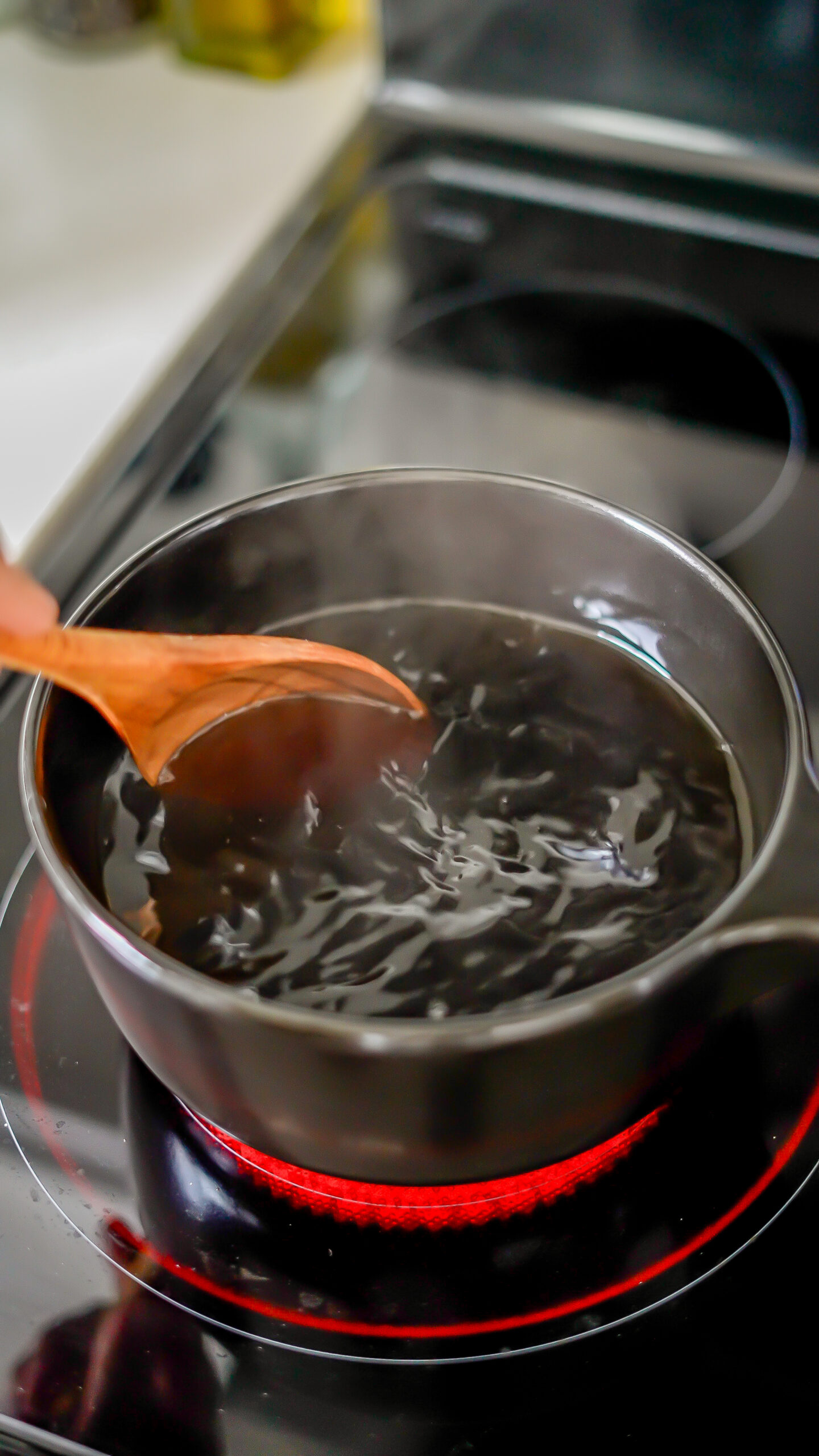
- Add water to a saucepot and bring the water to a boil.
- Add in the sugar slabs and turn the heat down to a simmer. Simmer until all of the sugar has dissolved. Remove from heat and let the sugar water cool down to room temperature.
- In a large bowl, add the mochiko flour. Create a small makeshift well in the middle and pour in some of the sugar water. Whisk into the flour and make sure there are no lumps. Repeat until all of the sugar water has been used up.
- Mix in the oil then add the mixture to a greased 7 inches wide and 3 inches deep bowl
- Prepare a steamer and add the gau. Let it steam for 4 hours. Times will vary based on bowl size and depth.
- Take out of the steamer, garnish with sesame seeds, and add on the red Chinese date.
Are there similar recipes?
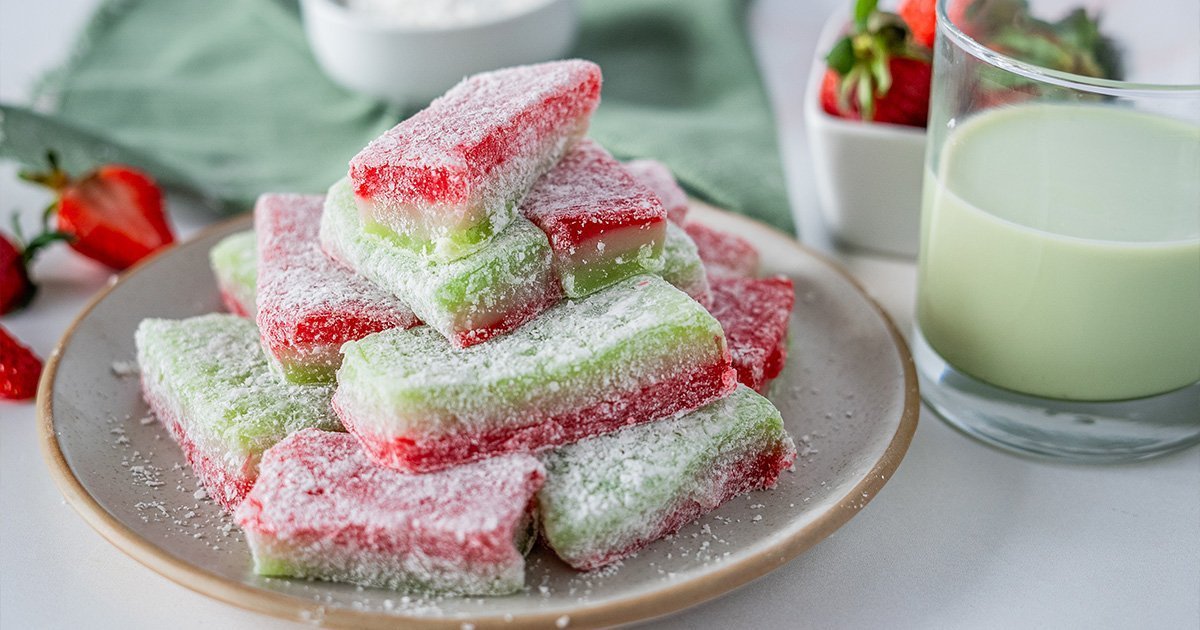
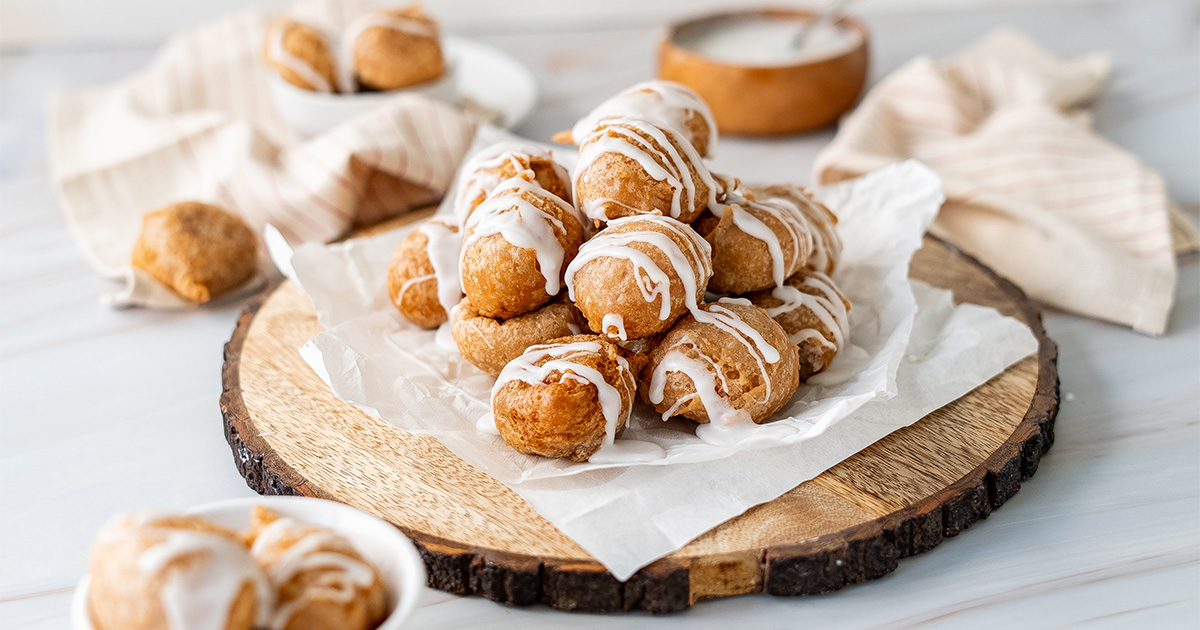
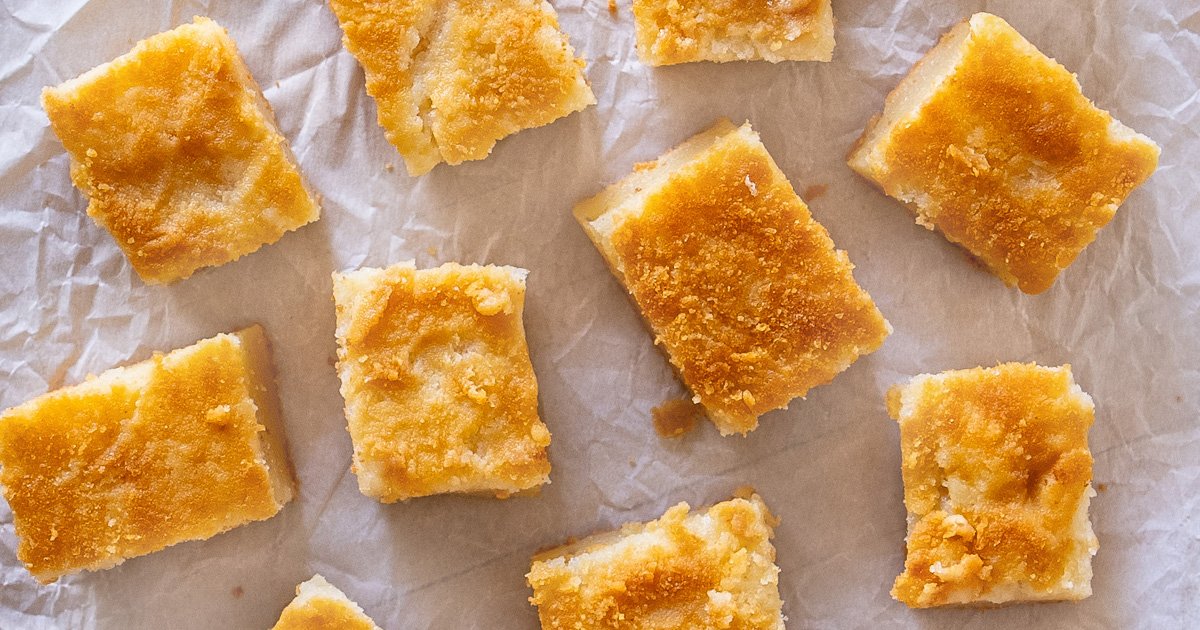
If you are in the mood for more sweet and chewy recipes like Gau, try out these recipes:
Tips & FAQs
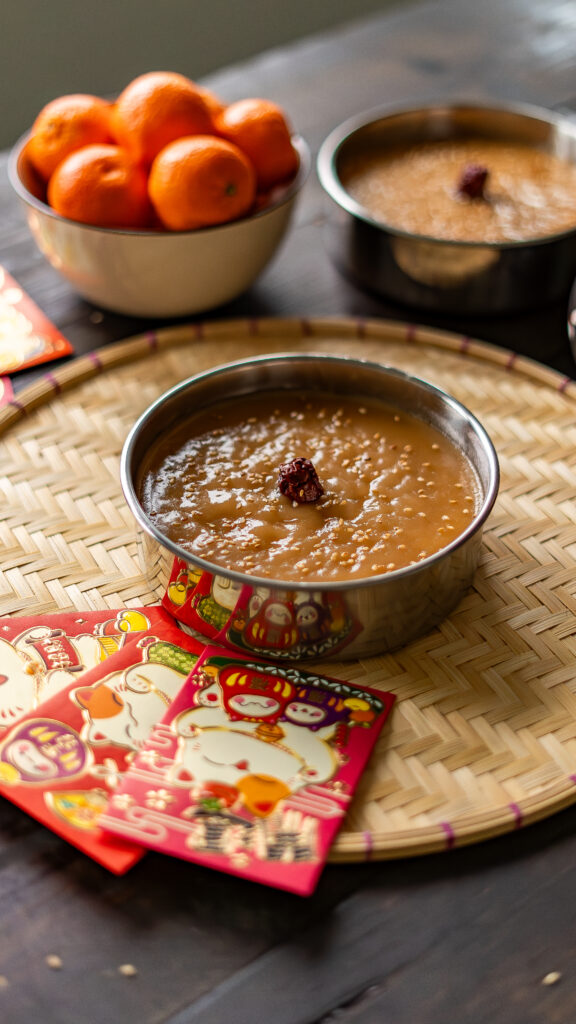
Gau, or nian gao (年糕), is symbolic of prosperity and advancement. The word “gao” sounds like “high” or “higher” in Chinese, so eating gau is believed to bring upward mobility in life, career, and finances.
You can keep gau out at room temperature for 1-2 days. If you want longer storage, you can refrigerate it for up to a week, or freeze it for up to 2-3 months. To enjoy, you can re-steam or pan-fry until it is crispy on the outside and soft and gooey inside.
Yes! I’ve seen some gaus made with coconut milk, matcha, and chocolate. Have fun and experiment with this versatile recipe.
A red dot or red paper on gau is a traditional Chinese custom symbolizing luck and happiness. Red is considered an auspicious color in Chinese culture.
Give this onolicious recipe a try! If you did give it a try, please leave a comment with a star rating below. Mahalo!
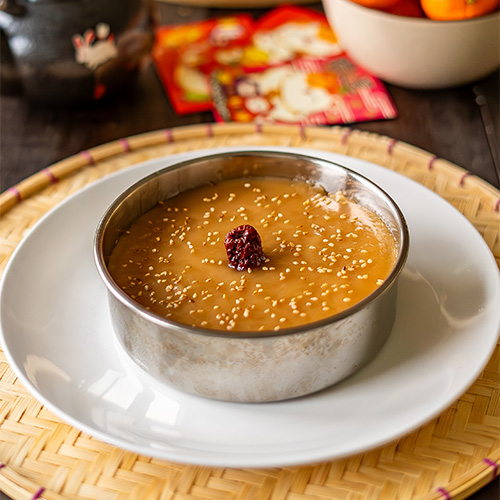
Gau (Nian Gao)
Video
Ingredients
- 1 lb Chinese slab sugar or brown sugar (2 cups)
- 2 1/2 cups water
- 1 lb mochiko (sweet or glutinous rice flour)
- 1/4 cup vegetable oil
- 1 Chinese red date (jujube)
- 1 tbsp toasted sesame seeds
Instructions
- Add water to a saucepot and bring the water to a boil.
- Add in the sugar slabs and turn the heat down to a simmer. Simmer until all of the sugar has dissolved. Remove from heat and let the sugar water cool down to room temperature.
- In a large bowl, add the mochiko flour. Create a small makeshift well in the middle and pour in some of the sugar water. Whisk the sugar water into the flour and make sure there are no lumps. Repeat until all of the sugar water has been used up.
- Mix in the oil then add the mixture to a greased 7 inches wide and 3 inches deep bowl.
- Prepare a steamer and add the gau. Let it steam for 4 hours. (Times to steam will vary based on bowl size and depth.)
- Take the gau out of the steamer, garnish with sesame seeds, and add on the red Chinese date. Enjoy this onolicious treat!
Notes
- Chinese slab sugar: https://amzn.to/2Ujru7p
- Mochiko flour: https://amzn.to/2RNOzxt
- Red date: https://amzn.to/2OiFFGg

Can put in smaller individual ramekin dishes to cut down on steaming time. Can also use a pressure cooker for faster steaming. A muffin pan probably will not fit in a steamer. My mom always put a dishcloth on top pinched by the lid to absorb moisture so it wouldn’t drip on to the gau. Be sure to add water to the steamer so it doesn’t burn. My mom fell asleep once and that’s what happened. My dad was so angry as the success of the gau foretells your luck in the new year. My mom also added coconut milk and mashed canned candied yams. If any leftovers, slice into thin pieces and wrap each in cling film or foil as a block is impossible to cut without thawing.
Surprised that the person did not line the pan with ti or banana leaves to make removal easier.
Unfortunately, Char Hung Sut is no longer in business. It was one of my favorite places to get dim sum. No one makes ma tai soo like them.
Ah! I didn’t know it wasn’t in business…shows how long it’s been since I’ve been there 🙁
Mataisu was the best at Vhar Hung Sut. Can get good ones now at Your Choice ouside Don Quijote on Kaheka Street. Always sells out fast. Good manapua, especially baked one. Shrimp hargau is plump and tasty. Lotsa free parking unlike Chinatown.
Char Hung Sut
Can I put mixture into muffin pan
Can put in smaller individual ramekin dishes to cut down on steaming time. Can also use a pressure cooker for faster steaming. A muffin pan probably will not fit in a steamer. My mom always put a dishcloth on top pinched by the lid to absorb moisture so it wouldn’t drip on to the gau. Be sure to add water to the steamer so it doesn’t burn. My mom fell asleep once and that’s what happened. My dad was so angry as the success of the gau foretells your luck in the new year. My mom also added coconut milk and mashed canned candied yams. If any leftovers, slice into thin pieces and wrap each in cling film or foil as a block is impossible to cut without thawing.