
Homemade SPAM

Homemade SPAM from scratch with pork shoulder, ham, and simple seasonings. Discover the rich history of SPAM in Hawaii, why prices have skyrocketed to $4.14 a can, and how making it yourself saves 44% while tasting so much better.
This post may contain affiliate links. Our privacy policy.
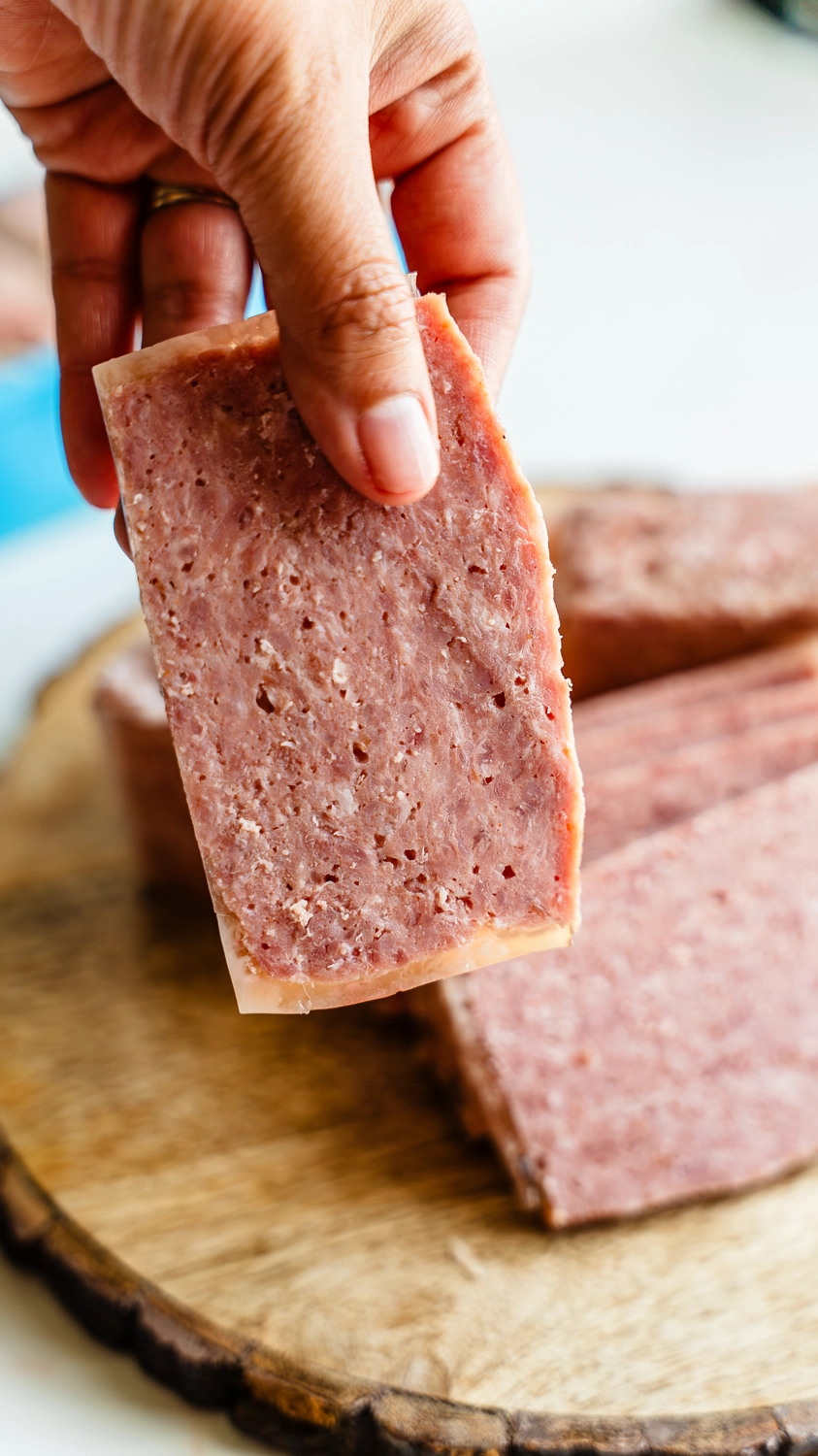
Why You’ll Love Making Your Own SPAM
- You know exactly what goes into it: real pork, real ham, and seasonings you can actually pronounce
- No synthetic preservatives for long-term shelf life, just food meant to be eaten
- You make roughly 8 cans’ worth for the price of 4.5 store-bought cans at $4.14 each
- The flavor is on a completely different level, especially if you go the Traeger route
- Once you have the base down, you can make it your own: more pepper, garlic, ginger, whatever calls to you
- Perfect for spam musubi, saimin, breakfast, and everything in between

A Brief History of SPAM
It all started on July 5, 1937, in Austin, Minnesota. Hormel Foods introduced a product they called SPAM, and the name itself has a great story behind it. Jay Hormel threw a New Year’s Eve party and offered a $100 prize to whoever could come up with the best product name. A man named Ken Daigneau won with “SPAM,” a word he had been sitting on for a while without anything to attach it to yet.
The original recipe was simple: pork with added ham, salt, water, sugar, and sodium nitrite. Five ingredients. Nobody expected it to become a global icon.
Then World War II happened.
During the war, SPAM became a military necessity. Fresh meat was scarce, refrigeration was unreliable, and feeding millions of soldiers across the globe required something shelf-stable, calorie-dense, and affordable. SPAM checked every box.
After the war, SPAM found its way into the pantries of working-class American families everywhere. It was filling, it was affordable, and it did not require much kitchen know-how to turn into a meal.

For decades, SPAM carried the reputation of a “poor man’s food.” Something you ate not because you wanted to, but because you had to. That reputation stuck for a long time.
And then something changed.
How SPAM Found Its True Home in Hawaii
While the mainland slowly moved on from SPAM after the war, the Hawaiian Islands were falling deeper in love with it. And that love never left.
Hawaii’s relationship with SPAM goes back to those same wartime years. During World War II, the islands were under martial law and fresh meat was heavily rationed for civilians. SPAM was one of the few protein sources reliably available. Local families, Japanese, Filipino, Chinese, Korean, and Native Hawaiian, began incorporating it into their traditional cooking. They seasoned it the way they knew. They paired it with the ingredients they had. And slowly, SPAM became something uniquely local to Hawaii.
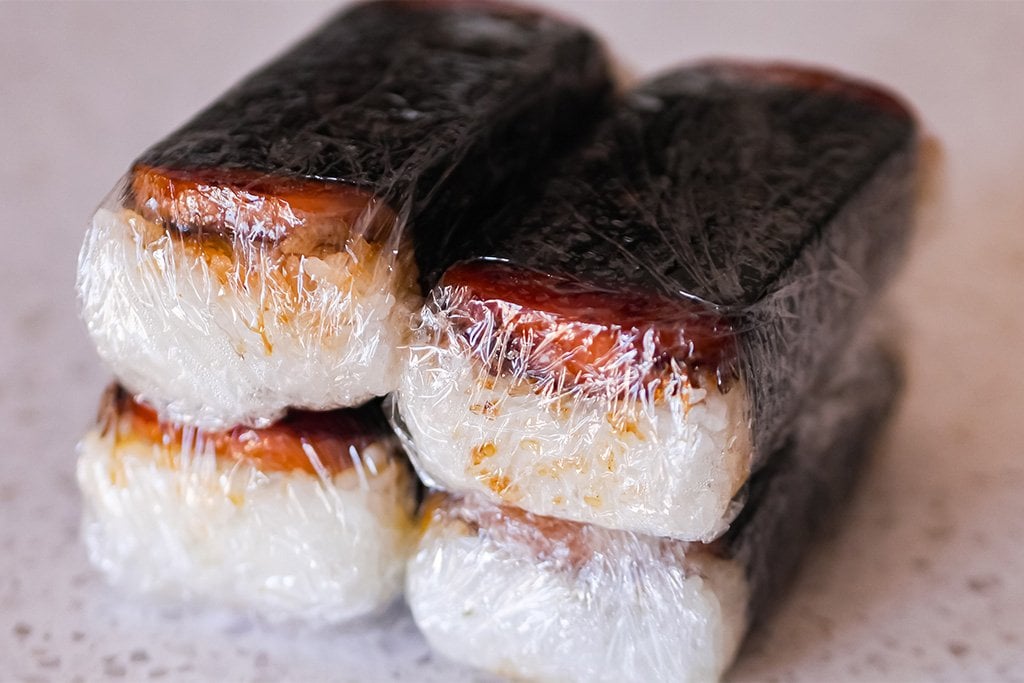
Today, Hawaii consumes more SPAM per capita than any other state in the U.S., over 7 million cans per year, or roughly five cans per person annually. That is not a typo.
Walk into any convenience store, grocery store, or plate lunch spot on the islands and SPAM is front and center. Not as a cheap filler. It is celebrated.
Recipes that Use SPAM
What makes SPAM’s place in Hawaii so special is how completely it got absorbed into Local food culture. It did not stay in the can. It transformed:




From Struggle Meal to Delicacy: The Great SPAM Price Creep
Here is where things get a little frustrating.
SPAM was designed to be affordable. It was born from the need to feed people cheaply and reliably. For most of the 20th century, it delivered on that promise. A can of SPAM was exactly what you reached for when money was tight.
But something shifted over the past decade. SPAM became cool. Celebrity chefs started featuring it on their menus. Food writers started talking about it with the same reverence they use for Wagyu beef. Hawaii’s food became trendy nationally. And with that trendiness came something Hawaii’s working families did not ask for: higher prices.
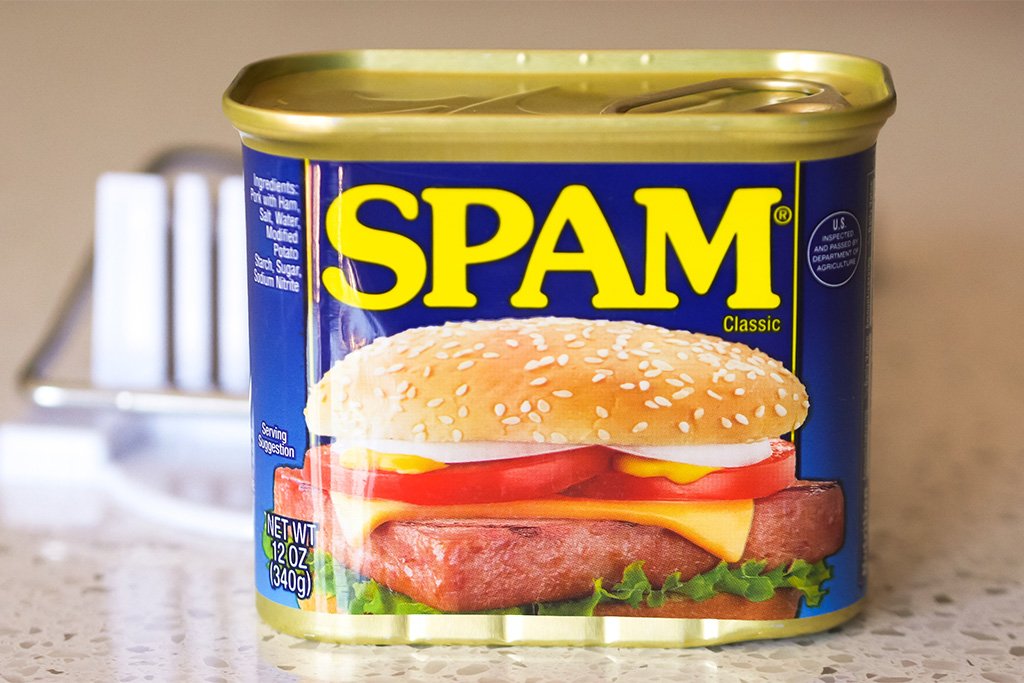
A can of SPAM Classic that used to cost under $2 now runs $4.14 at Walmart. That is more than double what it cost just a decade ago. In Hawaii, where everything costs more because of shipping and geography, it runs even higher.
For the communities that relied on SPAM because it was budget-friendly, this is not just inconvenient. It is a real problem. The affordable option is not so affordable anymore.
The Case for Homemade SPAM: Let’s Talk Real Numbers
This is exactly why I started developing this recipe. My goal was simple: make SPAM affordable again. And it worked.
Here is what it costs to make my homemade SPAM recipe compared to buying the equivalent in store-bought cans:
Ingredient Cost Breakdown
| Ingredient | Amount Used | Estimated Cost |
|---|---|---|
| Pork Shoulder (ground) | 5 lbs | $12.50 |
| Ham (ground) | 1 lb | $5.00 |
| Morton Tender Quick | 2 TBS + 1 tsp | $0.35 |
| Sugar | 3 TBS | $0.07 |
| Cornstarch | 3 TBS | $0.12 |
| Kosher Salt | 1 TBS | $0.05 |
| White Pepper | 1 tsp | $0.30 |
| Paprika | 1 tsp | $0.20 |
| Cold Water | 1 cup | $0.00 |
| Total Recipe Cost | ~$18.59 |
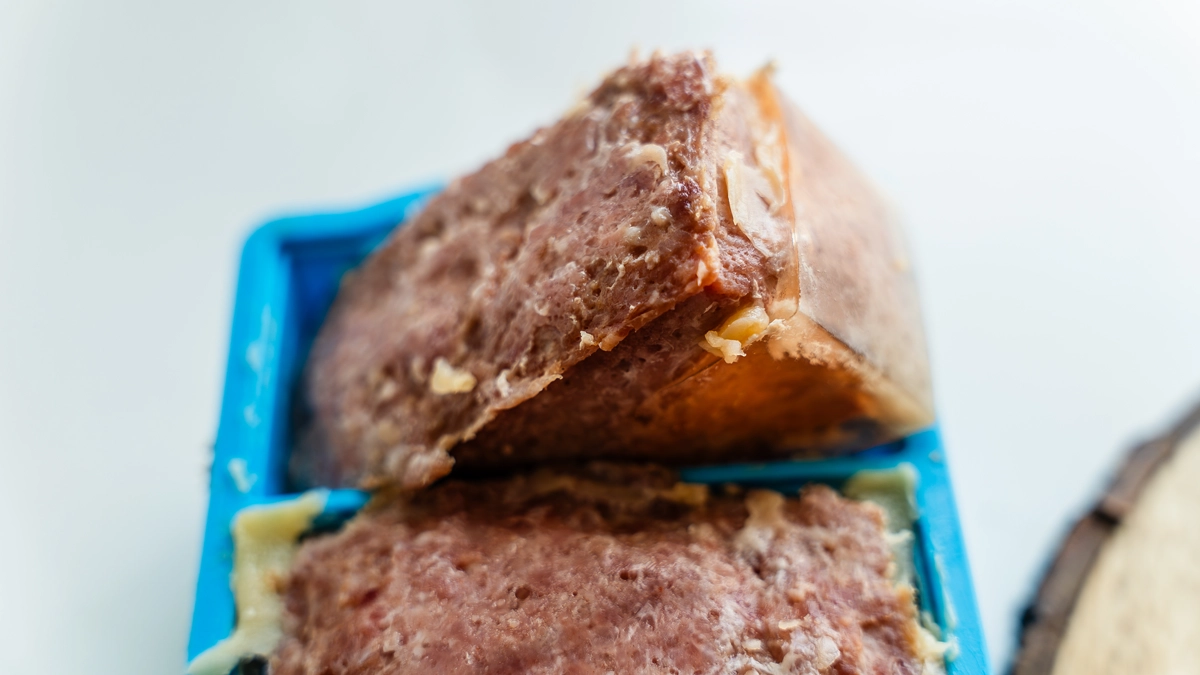
Homemade vs. Store-Bought
| Homemade | Store-Bought (Walmart) | |
|---|---|---|
| Total yield | ~6.25 lbs / ~100 oz | |
| Equivalent 12oz cans | ~8 cans | 8 cans |
| Total cost | ~$18.59 | $33.12 |
| Cost per can | ~$2.32 | $4.14 |
| Your savings | $14.53 (44% less) |
You are making roughly 8 cans’ worth of SPAM for the price of 4.5 cans. That is real money back in your pocket, and that is at regular grocery store prices, not even buying pork shoulder in bulk or on sale.
How to Make Homemade SPAM, Step by Step
-
1
Mix the Cure and Seasoning
In a bowl, whisk together the Tender Quick, sugar, cornstarch, kosher salt, white pepper, and paprika. Pour in the cold water and whisk until fully dissolved. No lumps. The cure needs to be completely liquid before it touches the meat.

-
2
Combine with the Meat
Add the ground pork shoulder and ham to a large bowl. Pour the cure mixture over the top and knead by hand for 1 to 2 full minutes until the mixture turns tacky and pulls together as one mass. Do not rush this. That tackiness is what holds the loaf together when you slice it.
-
3
Pack the Pans
Divide evenly between two 9×5 loaf pans or for that authentic spam-can shape I use this heat-resistant silicone mold, which fits almost exactly like the real thing. Press firmly as you go, working out any air pockets from the edges in toward the center. Pack it tight. Cover each pan snugly with aluminum foil.
-
4
Cook Low and Slow to 155°F
Oven: Place foil-covered pans in a larger roasting pan with hot water halfway up the sides. Bake at 250°F for 3 to 3.5 hours until internal temp hits 155°F.
Traeger: Preheat to 225°F with apple or pecan pellets. Place foil-covered pans on the grates and smoke 3 to 4 hours until 155°F. Remove foil the last 30 to 45 minutes for a deeper smoke.
-
5
Press While Hot, Refrigerate Overnight
The moment the pans come out, press each loaf firmly with something heavy and flat (a cast iron skillet works perfectly). This compresses the meat and gives you that tight, sliceable texture. Cool 20 minutes, then refrigerate overnight with the weight still on.
-
6
Slice, Sear, and Serve
Remove loaves from pans cold. This deli meat slicer is what I reach for — you get perfectly even cuts every time, especially when you’re making musubi and every piece needs to look the same. Get a cast iron pan screaming hot and sear each slice until golden and crispy on both sides. Serve with rice and eggs, layer into musubi, drop into saimin, or eat it straight off the pan.



Pro Tip
When the mixture starts sticking to itself and pulling away from the bowl as one mass, it is ready. That tackiness is the proteins binding, the same science behind every great sausage. Rush this step and your loaf will crumble when you slice it. Two full minutes minimum, using your hands.
Tips and FAQs
Yes, as long as you use the correct amount of curing salt (Morton Tender Quick) and cook the meat to an internal temperature of 155 degrees F. The curing salt is what makes it safe to eat cold after cooking, just like store-bought.
Morton Tender Quick is a curing salt blend that contains sodium nitrite and sodium nitrate. These are the compounds that cure the meat, give it that characteristic pink color, and prevent bacterial growth. Regular salt alone cannot do this safely. Do not skip it or substitute it.
Pork shoulder is the right cut here because of its fat content. That fat is what gives SPAM its rich, moist texture. Leaner cuts like pork loin will give you a drier, less authentic result.
Up to 1 week in the refrigerator, or up to 3 months in the freezer. I like to slice it before freezing so I can grab individual portions whenever I need them.
Absolutely. The oven method with a water bath makes a beautifully moist loaf. The Traeger just takes it somewhere extra special, but it is not required.
100 percent yes. I use a deli meat slicer to get perfectly even, uniform slices; that makes a big difference when you’re layering musubi and want every piece to look clean. Slice it thick, sear it hot, hit it with a little soy sauce and sugar, and press onto seasoned rice with nori. It is so good.
Storage Tips
Keeps in the fridge for up to 1 week. For longer storage, slice it first and freeze in an airtight container for up to 3 months. Pull out individual slices as you need them and sear straight from frozen or thawed overnight in the fridge.
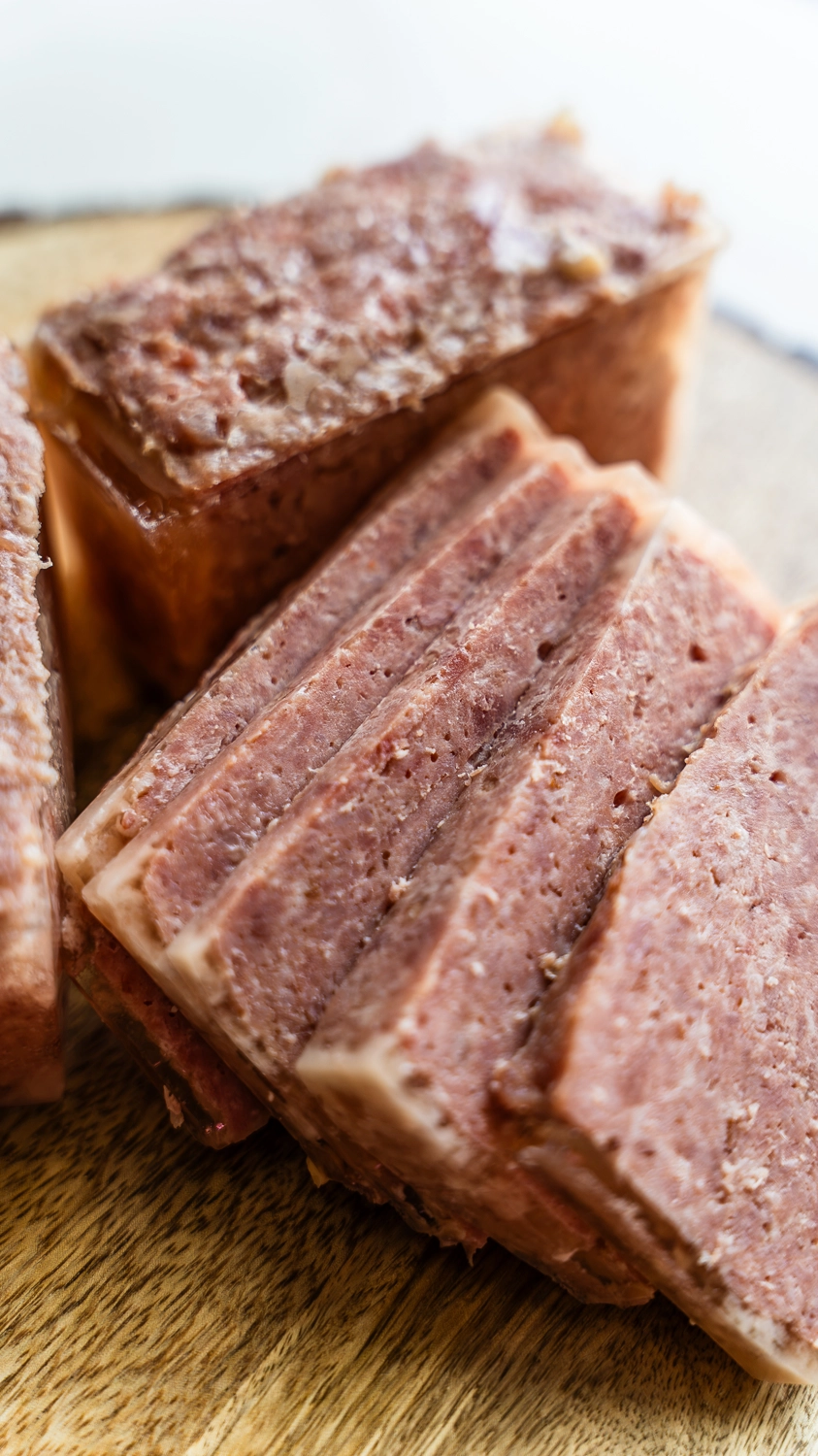
SPAM has a story most people have never heard. It is a story of wartime survival, of plantation-era communities making do and making something beautiful, and of a small group of islands that took a humble canned meat and made it entirely their own. Hawaii did not just accept SPAM. Hawaii claimed it.
And now, as the price tag keeps climbing on something that was always meant to be accessible, I think it is time to reclaim it differently. In our own kitchens. With ingredients we can name. For a fraction of the cost.
This recipe is for every local family that stretched a can of SPAM across three meals and still made it feel like a feast. It is for anyone who grew up with that little blue can as a comfort food and felt a sting the last time they checked the price.
SPAM should be affordable again. And now it is.
With aloha,
Tani
Liked this post? Share it with someone who has been paying full price. 😄
Tools I use for this recipe: heat-resistant silicone spam mold for shaping | deli meat slicer for even cuts

Homemade SPAM
Video
Equipment
- silicone mold
- loaf pan
Ingredients
- 5 lbs pork shoulder ground
- 1 lb ham ground
- 2 TBS + 1 tsp Morton Tender Quick curing salt
- 3 TBSP sugar
- 3 TBSP cornstarch
- 1 TBSP kosher salt
- 1 tsp white pepper ground
- 1 tsp paprika
- 1 cup cold water
Instructions
- In a bowl, whisk together the Tender Quick, sugar, cornstarch, kosher salt, white pepper, and paprika. Pour in the cold water and whisk until everything is fully dissolved. The cure needs to be completely liquid before it touches the meat.
- Add the ground pork shoulder and ham to a large bowl. Pour the seasoning mixture over the meat and knead by hand until fully incorporated and the mixture turns tacky. About 1-2 minutes of kneading. The tackiness is what holds everything together and gives you that firm, sliceable texture.
- Divide the mixture evenly between two 9×5 loaf pans or for that authentic spam-can shape I use this heat-resistant silicone mold, which fits almost exactly like the real thing. Pressing firmly as you go to remove any air pockets. Pack it tight. Cover each pan tightly with aluminum foil.
- OVEN METHOD: Place both foil-covered pans into a larger roasting pan and add hot water to come halfway up the sides of the loaf pans (water bath). Bake at 250°F for 3 to 3.5 hours, or until the internal temperature reaches 155°F.
- TRAEGER METHOD: Preheat your Traeger to 225°F using apple or pecan pellets. Place the foil-covered pans directly on the grill grates. Smoke for 3 to 4 hours, or until the internal temperature reaches 155°F. For more smoke flavor, remove the foil for the last 30 to 45 minutes.
- As soon as the pans come out of the oven or smoker, press each loaf firmly with a heavy flat object (cast iron skillet or dutch oven pot works great). This compresses the meat and removes any remaining air gaps. Let cool at room temperature for 20 minutes, then refrigerate overnight with a weight on top.
- Remove from the pans, slice to your desired thickness, and sear in a hot cast iron pan until crispy on both sides before serving.


Great taste but texture is more like condensed meatloaf. Next time I will blend in a stand mixer with paddle attachment to get back the firm creamy texture. Will make again
Mahalo for giving it a try and this is a great suggestion. I’ll also need to give that a try!
Homemade spam. That’s awesome
It really is!
what other type of salt can you use for this as we cannot get Tender Quick in Australia as I love spam and would love to be able to make my own.
You can use these cures: Prague Powder #1, Pink Curing Salt, or Insta Cure #1
Yum! Thank you!
You’re welcome Barbara!
why mortons?
I looked at amazon and other curing salts can be much cheaper.
It can be any other curing salts if you’d like. I just personally like Mortons for their consistent quality 🙂
I have not made the SPAM recipe, but would like to try as I love SPAM. With this recipe, I would be able to regulate the salt content. Dad who was a WWII vet and cooked, among other duties in the army, did not understand why his #1 daughter liked the over served “meat” that much.
My favorite way of serving it to my family is with pineapple and a sweet and sour sauce made of pineapple juice…YUMMY. Thank you for posting and developing the recipe.
Mahalo to your dad for his service! That’s the beauty of homemade spam. People can adjust the recipe according to their preference and diet needs.The sweet and sour sauce sounds like the spare ribs recipe. Sounds amazing with spam too!
I have spice lab curing salt, can that be used instead of the morton brand?
Sure! Check it’s measuring recommendations first 🙂