
Homemade Saimin Noodles

Fresh saimin noodles are hard to find outside Hawaii, so I made my own from scratch. This homemade saimin noodles recipe gets that signature chewy, springy bite with just five ingredients.
This post may contain affiliate links. Our privacy policy.
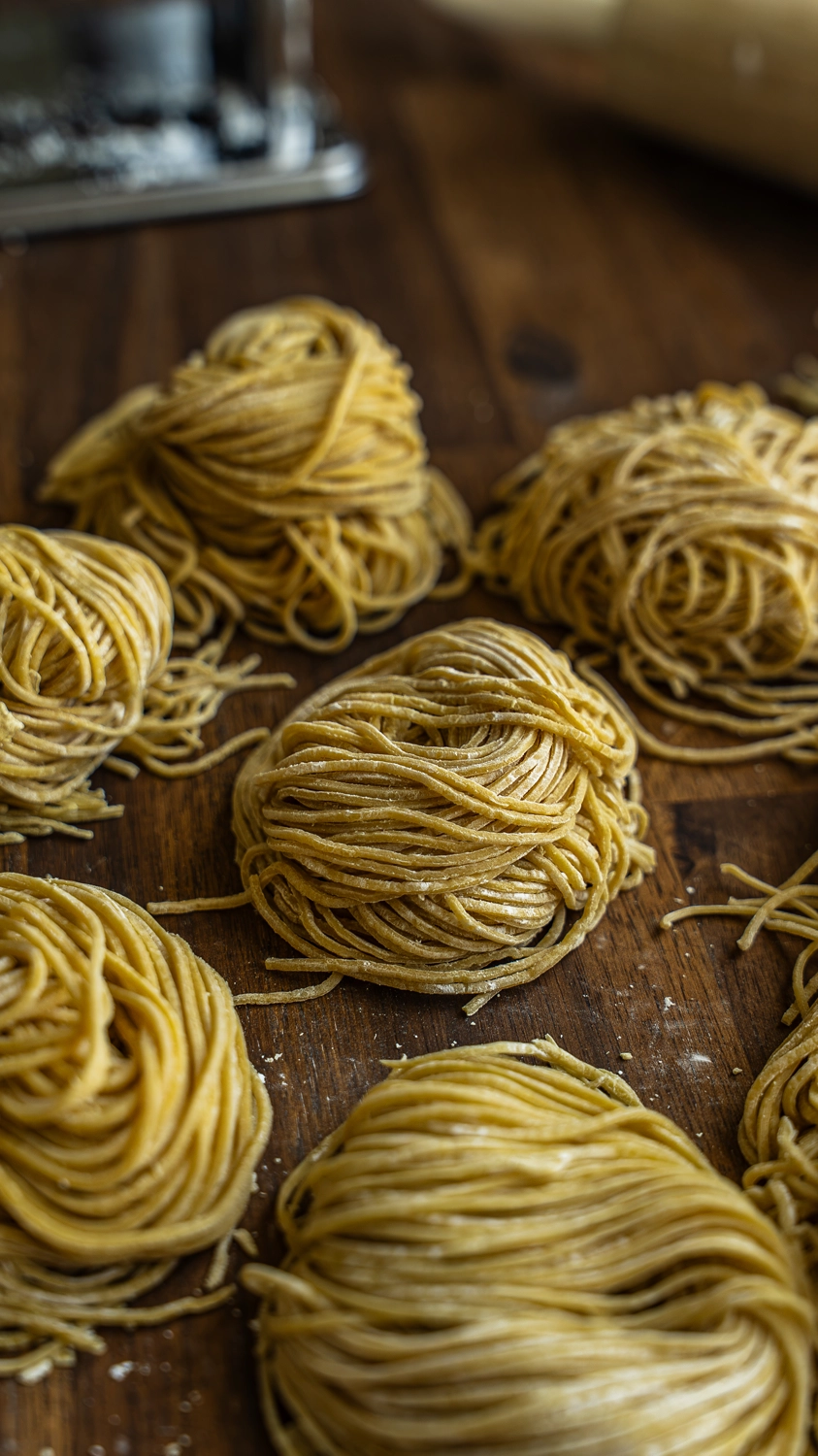
Try finding fresh saimin noodles on the mainland. I’ll wait. You can get instant packs at some Asian grocery stores if you’re lucky, but the real, fresh, springy noodles that Hawaii noodle stands are known for just don’t ship well, and most mainland stores don’t carry them at all. So I made a batch of homemade saimin noodles myself, and honestly, it wasn’t as intimidating as I expected.
Here’s the other thing nobody tells you: even in Hawaii, there’s no single “correct” saimin noodle. Every noodle factory and every plate lunch counter has its own version, thinner or thicker, softer or springier. Sun Noodle is the one most people think of first, they’ve been making fresh noodles out of Kalihi since 1982 and their saimin shows up in grocery stores from Oahu to California. But Sun Noodle’s noodle isn’t the only noodle. It’s just the one that got big.
Origination of Saimin Noodles
Where saimin actually started is genuinely debated among food historians. Some of the earliest newspaper records tie it to Chinese immigrant communities as far back as 1908. Others point to Japanese immigrants trying to recreate the ramen they missed from home, adapting it with whatever ingredients were available on the plantation. Both theories have real evidence behind them, and neither one fully explains it. That’s part of what makes saimin, saimin; it wasn’t invented by one culture, it was built by several of them at once.

Fun fact
Saimin was once a McDonald’s menu item, and nowhere else in the world. Hawaii entrepreneur Maurice “Sully” Sullivan convinced Ray Kroc himself to add a local dish to the McDonald’s menu for the first time in the company’s history. It stayed on Hawaii McDonald’s menus for decades until 2022, when it was discontinued after the chain’s longtime noodle supplier, Okahara Saimin, closed for good.
Why You’ll Love This Homemade Saimin Noodles Recipe
- Uses five ingredients you can find at almost any grocery store, no specialty noodle shop required
- Gives you that signature chewy, springy bite that separates real saimin noodles from regular egg noodles
- Freezes well, so one batch sets you up for saimin night whenever the craving hits
- Works with a manual pasta maker, you don’t need a dedicated noodle machine
- Lets you control the noodle thickness, thinner for a classic bowl, thicker if you want something closer to udon
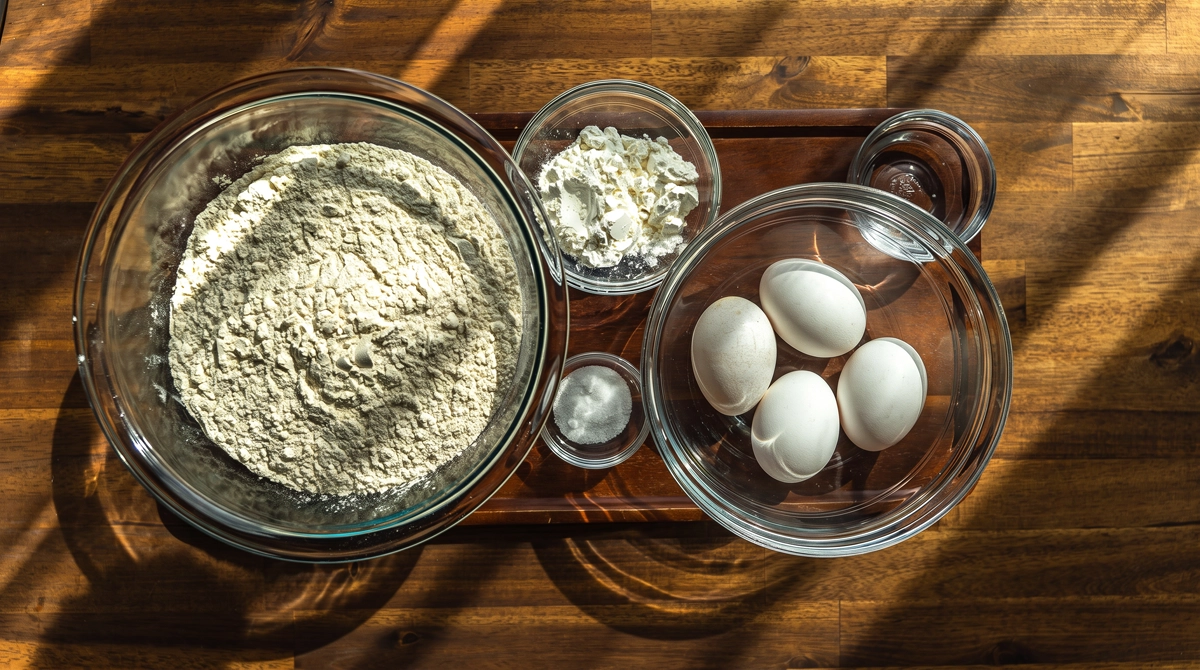
Ingredients for Homemade Saimin Noodles
A few notes on ingredients before you start:
- Bleached all-purpose flour: Stick with a bleached flour like Gold Medal rather than bread flour. Bread flour’s higher protein content makes the dough tougher to roll thin.
- Eggs: Scaled this down to a home-sized batch and landed on 4 eggs for 1 pound of flour.
- Lye water: This is what gives saimin noodles their springy, slightly yellow bite. Look for it at Asian grocery stores, sometimes labeled kansui. No lye water? See the FAQ for a baking soda workaround.
- Pasta maker: I used a manual pasta maker, running the dough through every setting from 1 to 6, then switching to the 2mm cutter attachment to cut the noodles. A stand mixer pasta roller attachment works too.
- Cornstarch: For dusting the machine and dough so nothing sticks.
How to Make this Homemade Saimin Noodles Recipe
-
1
Make the well.
Pour the flour into a large mixing bowl and make a well in the center.

-
2
Mix the wet ingredients.
In a separate bowl, beat together the eggs, water, salt, and lye water.
-
3
Combine.
Pour the liquid slowly into the flour well, mixing with a chopstick as you go so it incorporates evenly instead of clumping.
-
4
Knead.
Use your hands to fold the dough together and knead for about 5 minutes. If it feels crumbly or dry, add a little more water, a teaspoon at a time.
-
5
Rest.
Let the dough in a bowl, cover it with a damp cloth, and let it rest 30 minutes to 2 hours in a cool spot.
-
6
Divide.
Cut the dough into 4 slabs. Work one at a time, keeping the rest covered, and roll each slab flat enough to feed into your pasta maker.
-
7
Roll it through the pasta maker.
Dust with cornstarch as you go. Starting at setting 1, run the dough through, then move up through each setting, 2, 3, 4, 5, all the way to 6, so it gets thinner with every pass.
-
8
Cut the noodles.
Switch to the 2mm cutter attachment and pass the dough through to cut it into noodles. Cut the strands into 10 to 12 inch lengths. Wind the noodles into fist-sized nests. Cook them right away, or wrap individually for the fridge or freezer.
-
9
Cook.
Boil the noodle bundles in rolling water for 5-6 minutes, less time for firmer noodles. Drain and rinse briefly under hot water for a clearer broth. Serve with your favorite recipe and enjoy!



Pro Tip
Don’t rush the rest step. Even 30 extra minutes makes the dough noticeably easier to roll thin, and you’ll notice it in the final bite.


FAQs for Homemade Saimin Noodles
Yes. Bake 1 cup of baking soda on a lined tray at 250°F for an hour to convert it into a stronger alkaline salt (a kansui substitute). Store the baked solution in a air tight container. When ready to create the lye water, mix the baking soda with water at a 1:4 ratio, 1 part baked baking soda to 4 parts water. For example, 1 teaspoon of baked baking soda to 4 teaspoons water. Mix that, then use 1 teaspoon for the lye water in the recipe. Or skip the DIY route entirely and just pick up a bottle of lye water at your local Asian market or online.
Both are alkaline wheat noodles, but saimin noodles are traditionally thinner and softer, meant to sit in a light dashi broth rather than a rich tonkotsu or miso base. Ramen noodles tend to be firmer and wavier.
No. A manual pasta maker works great, just run the dough through each setting from 1 to 6, then switch to the 2mm cutter attachment. A stand mixer pasta roller attachment works too.
Wrapped tightly, they’ll keep in the fridge for about 2 days or in the freezer for up to 2 months. Boil (with added time) straight from frozen, no need to thaw first.
It usually means it needs more water or a longer rest. Add water a teaspoon at a time until the dough comes together, and don’t skip the rest period, it relaxes the gluten and makes rolling much easier.
Yes, everything scales evenly. Just work in batches when rolling so you’re not fighting a huge slab of dough at once.
A Note from Tani
The first time I rolled saimin noodles by hand, I kept thinking about how many hands must have done this exact motion before mine, on plantations, in noodle factory kitchens, in home kitchens just like this one. It’s a simple dough. Flour, egg, water, salt, and lye water. But it carries a lot of history in every pass through the machine.
With aloha, Tani

Homemade Saimin Noodles
Video
Equipment
- Large mixing bowl
Ingredients
Noodle Dough
- 1 lb all-purpose flour
- 4 large eggs
- 1 tsp salt
- 3/4 cup water plus more as needed
- 4 tsp lye water or baked baking soda substitute, see notes
- cornstarch for dusting
Instructions
- Pour the flour into a large mixing bowl and make a well in the center.
- In a separate bowl, beat together the eggs, water, salt, and lye water.
- Pour the liquid slowly into the flour well, mixing with a chopstick as you go.
- Fold the dough together with your hands and knead for about 5 minutes. Add a little more water, a teaspoon at a time, if the dough feels crumbly.
- Pack the dough tightly into a bowl, cover with a damp cloth, and let rest 30 minutes to 2 hours in a cool spot.
- Cut the dough into 4 slabs. Working with one at a time, use a rolling pin to flatten it until thin enough to pass through the machine’s flat rollers.
- Dust the 4 slabs with cornstarch and pass the dough through the flat rollers 4 times, folding it in half between each pass.
- Starting at setting 1, run the dough through, then move up through each setting, 2, 3, 4, 5, all the way to 6, so it gets thinner with every pass.
- Switch to the 2mm cutter attachment and pass the dough through to cut it into noodles. Cut the strands into 10 to 12 inch lengths. Wind the noodles into fist-sized nests. Cook them right away, or wrap individually for the fridge or freezer.
- Boil the noodle bundles in rolling water for 5 to 6 minutes. Drain and rinse briefly under hot water for a clearer broth. Enjoy!
Notes
- Store fresh noodles in the fridge for up to 2 days or freeze for up to 2 months. Boil straight from frozen.
- No lye water on hand? Bake 1 cup of baking soda at 250F for 1 hour to make a kansui substitute


Tani….
Hamura Saimin, Ono noodles ~FRIED, Saimin omg! They go back to forever.. Like buying manapua from Oahu
omgosh… My aunties used to talk about it all the time when we were kids… those were the days🌺 Those things you buy when you return to the different islands… lol yum!
Yes!! You get it aunty! saimin noodles is such a Hawaii classic and brings back the good times. Mahalo for sharing 🙂