
Pandesal (My Step Mom’s Recipe)

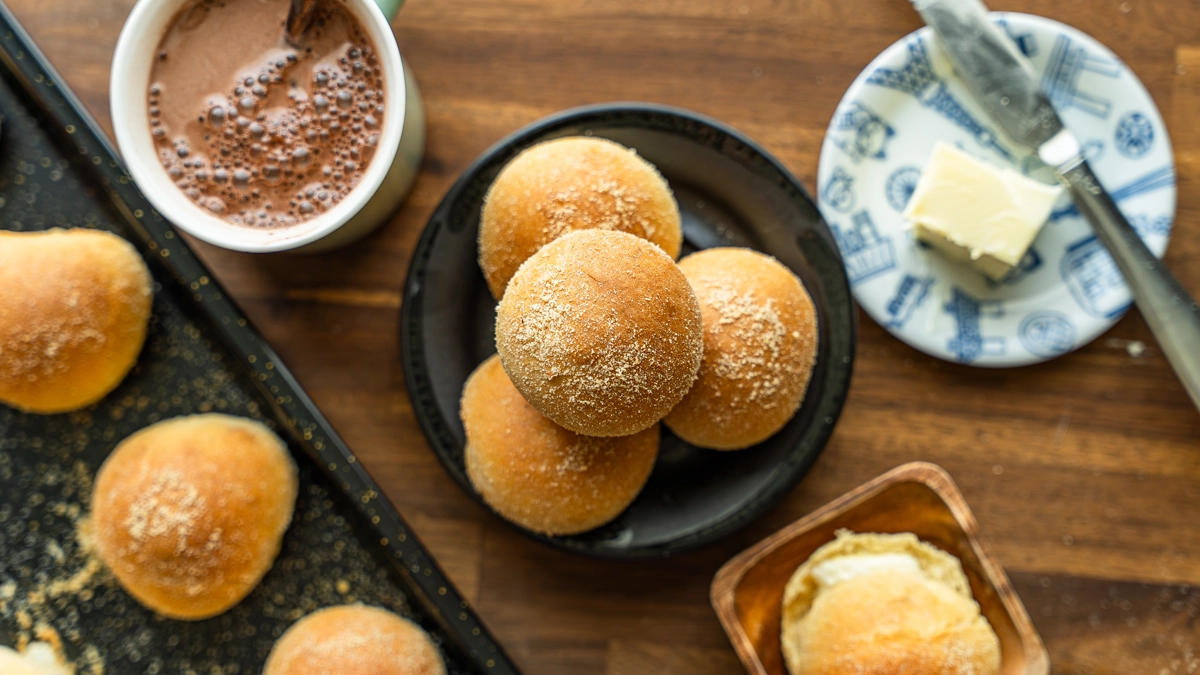
Soft, pillowy Filipino pandesal rolled in crunchy fine breadcrumbs, made with a tangzhong method. Enjoy with a cup of hot coffee or cocoa for your morning routine.
This post may contain affiliate links. Our privacy policy.
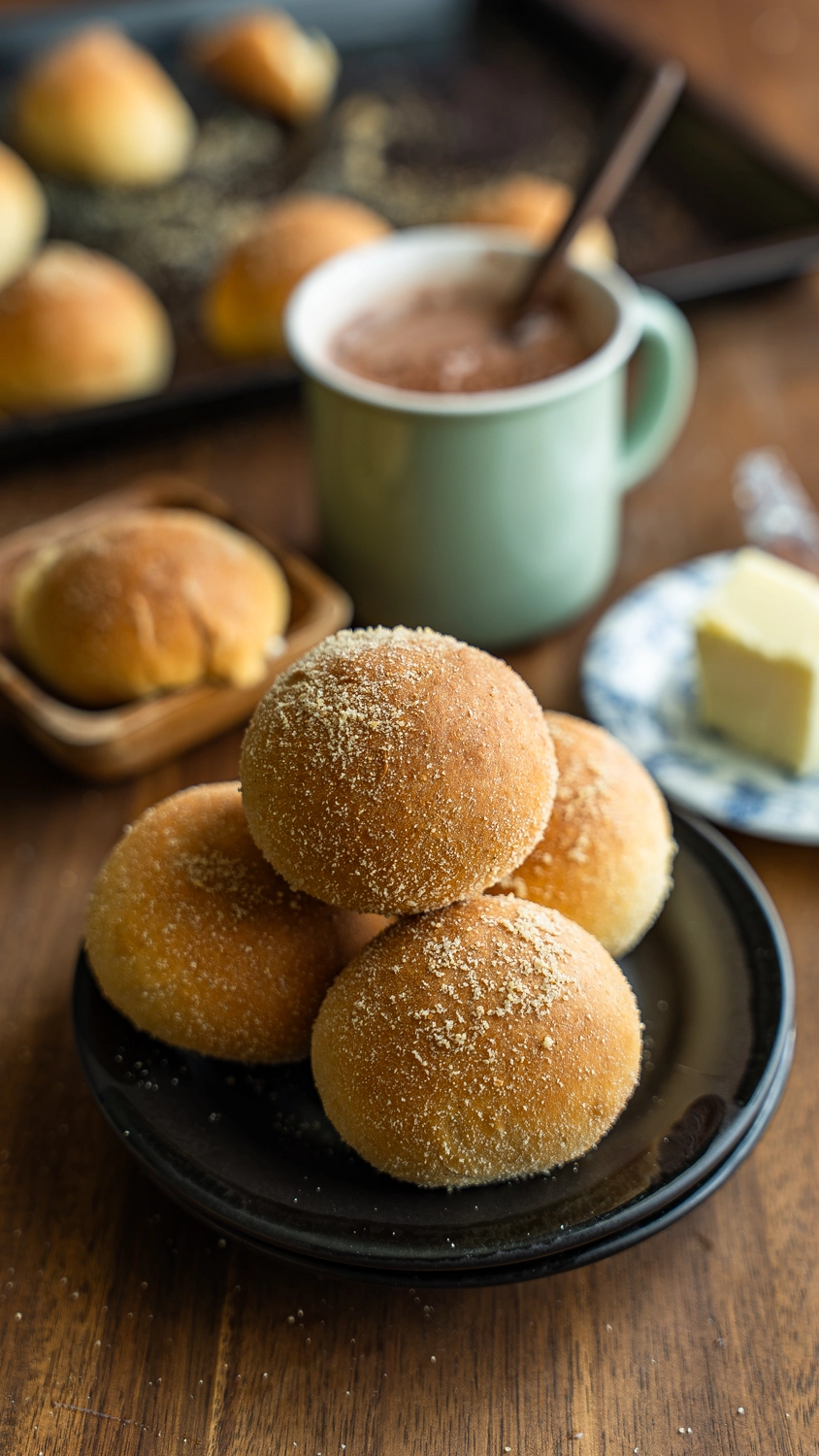
My step mom handed me a gallon size Ziploc bag stuffed with pandesal on our way out the door to the beach. The bag was still warm.
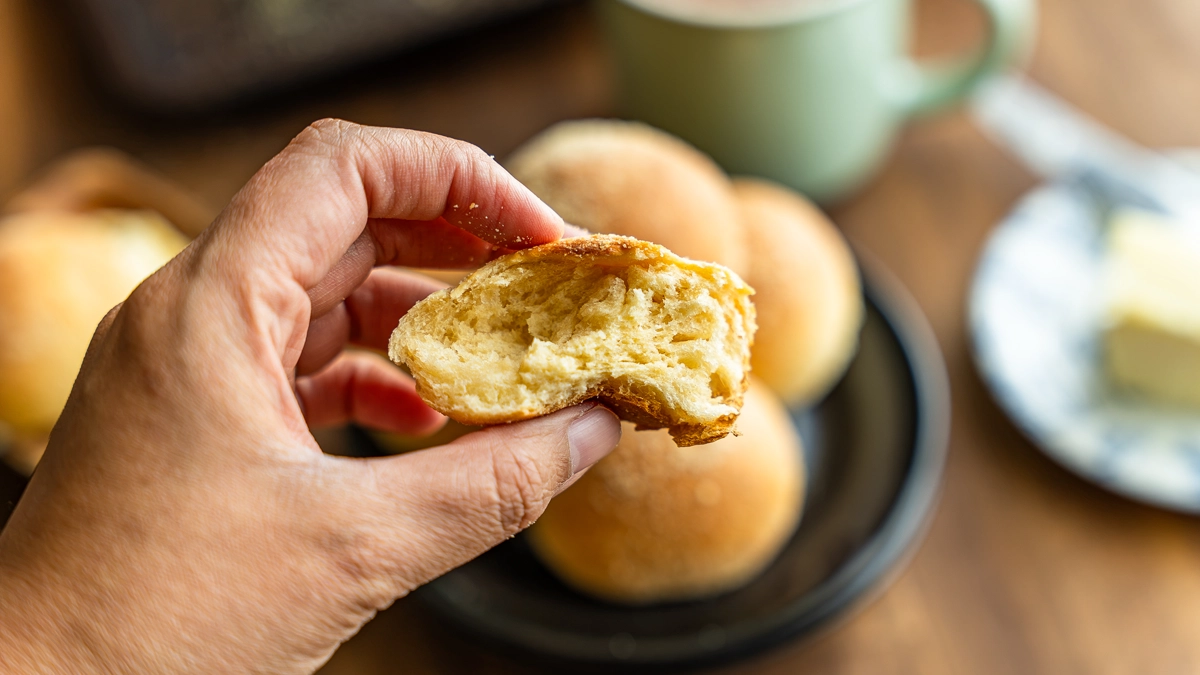
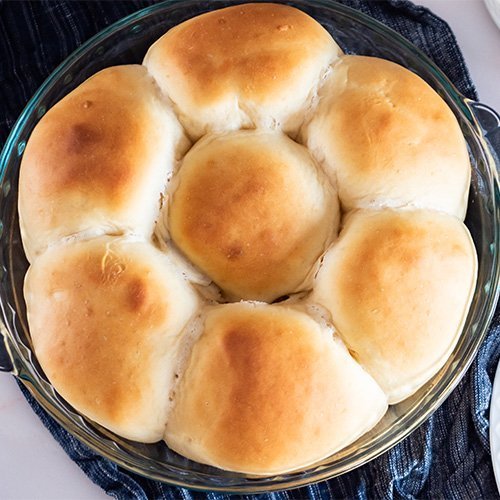
I remember thinking it was a lot of bread for one beach trip, and then I opened it and understood completely. Each roll was soft enough to pull apart with two fingers, but the outside had this thin, layer of fine breadcrumbs that added a crunchy texture.
Soft on the inside, crunchy on the outside, the kind of texture contrast that makes you appreciate this wonderful treat. I wish I’d had these growing up.
What Pandesal Is, and Where It Comes From
It’s a Filipino staple, a soft yeast roll traditionally coated in fine breadcrumbs, eaten at breakfast across the Philippines for generations, usually still warm from a neighborhood bakery.
What pandesal has in Hawaii is a different kind of story. Hawaii’s Filipino community is one of the largest immigrant communities on the islands, going back to the plantation era.
Pandesal has become part of the everyday food culture here right alongside other local staples like Spam musubi and loco moco. It shows up at okazuya counters, corner bakeries, and family breakfast tables across the islands.
My step mom’s version, with her own changes worked in over years of baking, is one small piece of that bigger story.
Why You’ll Love This Pandesal Recipe
- Makes 16-17 soft, pillowy rolls with a layer of crisp fine breadcrumbs
- About 3 hours start to finish, and most of that is hands-off rise time
- One stand mixer and three bowls is all the equipment you need
- Freezes well, so you can bake a batch now and pull rolls out later
- Built from pantry staples: flour, sugar, butter, egg, and milk
- A family recipe made extra soft with a tangzhong (water roux) twist you won’t find in every version
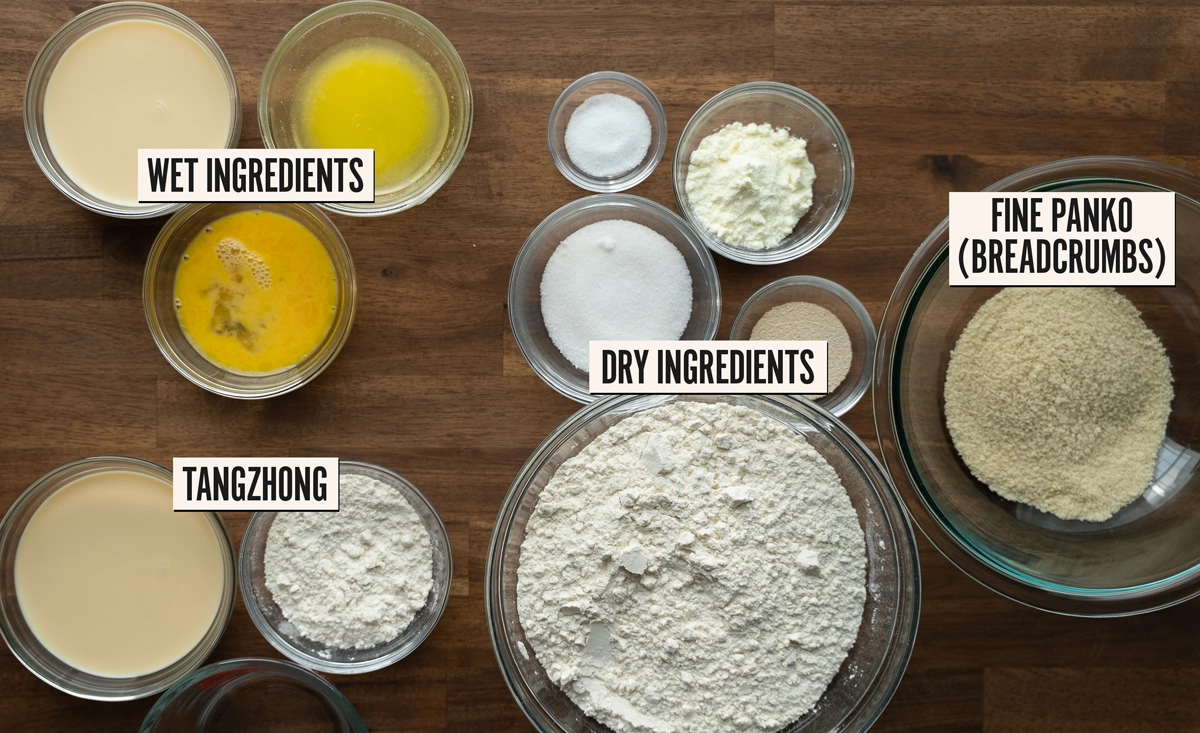
Ingredients for Pandesal
A few notes on ingredients before you start:
- Active dry yeast: make sure it’s fresh. If your dough doesn’t rise well after an hour, the yeast may be old.
- Evaporated milk: this is what gives the dough its richness and that classic soft pandesal crumb.
- Butter: melted and mixed into the dough for richness and a softer crumb.
- Plain breadcrumbs: skip seasoned or panko style breadcrumbs. You want the fine, plain kind for the classic pandesal coating.
- Dry milk: optional, but it helps make this pandesal fluffier and richer.
How to Make this Pandesal Recipe
-
1
Proof the yeast.
In the bowl of a stand mixer, combine the warm water and yeast. Let sit for 10 minutes, or until the mixture becomes bubbly. Stir well.

-
2
Make the tangzhong.
In a small saucepan, whisk the 40g flour and the 200g liquid (60ml water + 140ml evaporated milk) together until smooth with no lumps. Cook over medium-low heat, whisking constantly, until it thickens into a smooth, thick paste, about 2 to 3 minutes. Remove from heat and let it cool to room temperature before using.
-
3
Combine the dry ingredients.
In a large bowl, combine the remaining 395g flour, sugar, salt, and dry milk.
-
4
Add the wet ingredients.
Add the beaten egg, remaining 100ml evaporated milk, melted butter, and the cooled tangzhong to the proofed yeast.
-
5
Knead.
Slowly mix in the dry ingredients until a shaggy dough forms, then knead until smooth and elastic: about 15 minutes by hand, or 10 to 15 minutes on a stand mixer, speed 3.
-
6
First rise.
Form into a ball, then transfer to a bowl. Cover with plastic wrap or a damp cloth. Let rise in a warm place for about 1 to 2 hours or until doubled in size. Tangzhong dough can get there a little faster, so start checking around the 1-hour mark.
-
7
Divide.
Punch down the dough to remove air pockets, then transfer to a floured surface. Form into a log and divide equally into pieces, about 50 grams each. Keep unused pieces covered while you work.
-
8
Shape.
Gather all sides of a piece of dough and tuck under to form a ball. On a clean, unfloured surface, cup your hand loosely into a U shape over the dough and rotate it with light pressure until it’s smooth and round.
-
9
Coat.
Coat with bread crumbs, then arrange on a pan, leaving an inch of space in between. Cover and let rise again for another 30 to 45 minutes.
-
10
Bake.
Preheat oven to 350°F, then place the baking sheet on the middle rack and bake for about 18 to 22 minutes. Tangzhong doughs can brown a little faster from the added moisture, so check at the 18-minute mark first.


FAQs for Pandesal
Yes. After the first rise, punch the dough down, cover it tightly, and refrigerate overnight. Let it come back to room temperature before shaping and continuing with the recipe.
Yes. Let the baked rolls cool completely, then freeze in an airtight bag for up to a month. Reheat in a warm oven for a few minutes before serving.
This usually means the dough didn’t rise long enough, or the yeast wasn’t active. Give the dough a poke, if it springs back slowly and leaves a slight indent, it’s ready. If it springs back fast, it needs more time.
You can, but that crunchy shell against the soft crumb is really what makes pandesal, pandesal.
A Note from Tani
My stepmom always says she can tell by feel, not by measuring, whether a batch of dough needs a little more flour or a little more liquid to get that light, fluffy texture just right.
If your dough feels too sticky after kneading, add flour a tablespoon at a time until it feels smooth and manageable, not stiff.
Pandesal is at its best still warm, split open with a little butter melting into the middle. It’s a classic breakfast bread on its own with coffee, but it’s also good alongside eggs and a slice of fried Spam.
Leftover rolls make a great base for a simple breakfast sandwich too.
This recipe is one small piece of my stepmom’s years of bread baking, and I’m glad she was willing to share it.
With aloha, Tani

Pandesal
Video
Equipment
- Stand mixer with dough hook
Ingredients
Tangzhong (Water Roux)
- 40 g flour reserved from the flour below
- 60 ml water
- 140 ml evaporated milk (1/2 cup)
Proofing the Yeast
- 2 tbsp warm water
- 2 1/4 tsp dry yeast 7g
Dry Ingredients
- 395 g all-purpose flour about 2 3/4 cups, plus more for kneading
- 1/4 cup granulated sugar 40g
- 1 tsp salt
- 2 tbsp powdered milk 15g (optional)
Wet Ingredients
- 1 large egg beaten
- 100 ml evaporated milk
- 3 tbsp butter melted, 42g
Coating
- 1 cup plain breadcrumbs for rolling
Instructions
- In the bowl of a stand mixer, combine the 2 tablespoons warm water and the 7g yeast. Let sit for 10 minutes, or until the mixture becomes bubbly. Stir well.
- In a small saucepan, whisk the 40g flour and the 200g liquid (60ml water + 140ml evaporated milk) together until smooth with no lumps. Cook over medium-low heat, whisking constantly, until it thickens into a smooth, thick paste, about 2 to 3 minutes. Remove from heat and let it cool to room temperature before using.
- In a large bowl, combine the remaining 395g flour, sugar, salt, and powdered milk.
- Add the beaten egg, remaining 100ml evaporated milk, melted butter, and the cooled tangzhong to the proofed yeast.
- Slowly mix in the dry ingredients until a shaggy dough forms, then knead until smooth and elastic: about 15 minutes by hand, or 10 to 15 minutes on a stand mixer, speed 3.
- Form into a ball, then transfer to a bowl. Cover with plastic wrap or a damp cloth. Let rise in a warm place for about 1 to 2 hours or until doubled in size. Tangzhong dough can get there a little faster, so start checking around the 1-hour mark.
- Punch down the dough to remove air pockets, then transfer to a floured surface. Form into a log and divide equally into pieces, about 50 grams each. Keep unused pieces covered while you work.
- Gather all sides of a piece of dough and tuck under to form a ball. On a clean, unfloured surface, cup your hand loosely into a U shape over the dough and rotate it with light pressure until it's smooth and round.
- Coat with bread crumbs, then arrange on a pan, leaving an inch of space in between. Cover and let rise again for another 30 to 45 minutes.
- Preheat oven to 350°F, then place the baking sheet on the middle rack and bake for about 18 to 22 minutes. Tangzhong doughs can brown a little faster from the added moisture, so check at the 18-minute mark first.
- Cool slightly before serving warm.
Notes
- Prep and total time are estimates.
- Rise times can run 1 to 1.5 hours for the first rise and 30 minutes to 1 hour for the second, depending on how warm your kitchen is.
- Dough can be refrigerated overnight after the first rise.
- Baked rolls freeze well for up to 1 month in an airtight bag.



Can you share how to do the long fermented version?
That’s a great suggestion! I’ll make another recipe for that. Mahalo for asking!